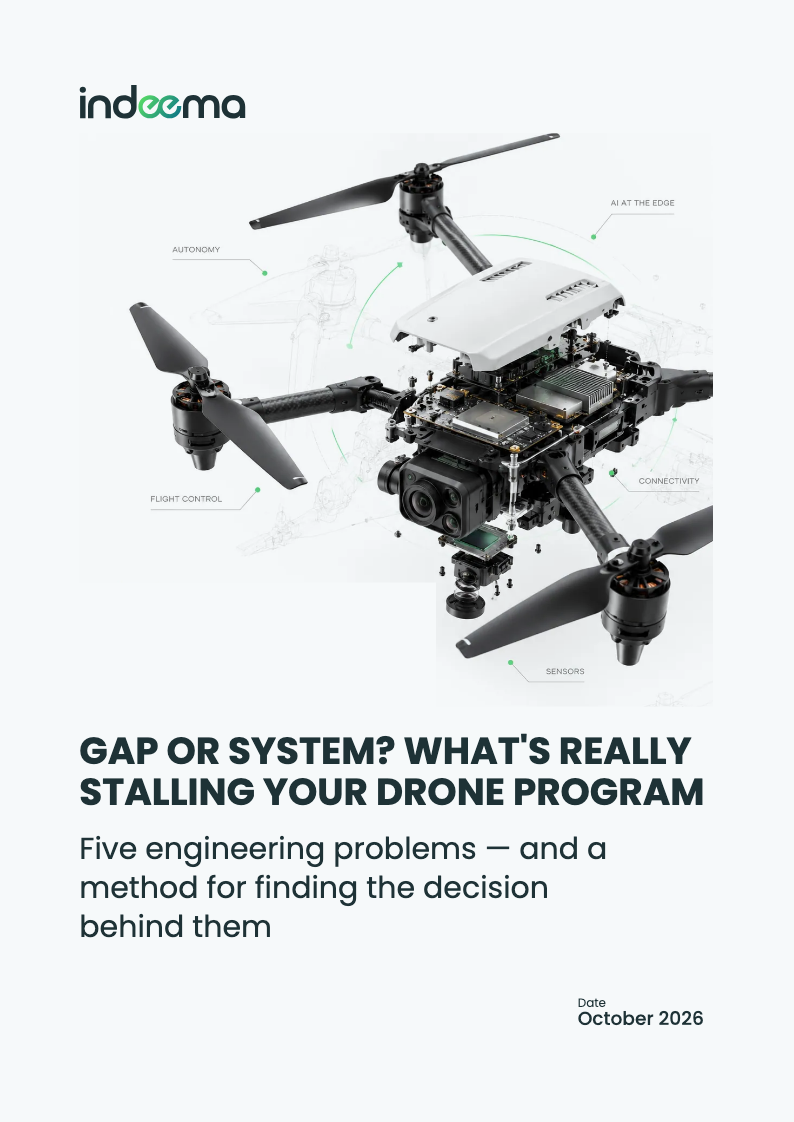
Drone software development for aircraft that have to fly, link and update
Indeema is a drone software development company that engineers what the software runs on: flight-controller and speed-controller electronics, firmware, the data link, and the ground tools that configure and update the aircraft.
A drone is not software on something that happens to fly. Every function is carried, powered, connected and maintained where the aircraft operates.
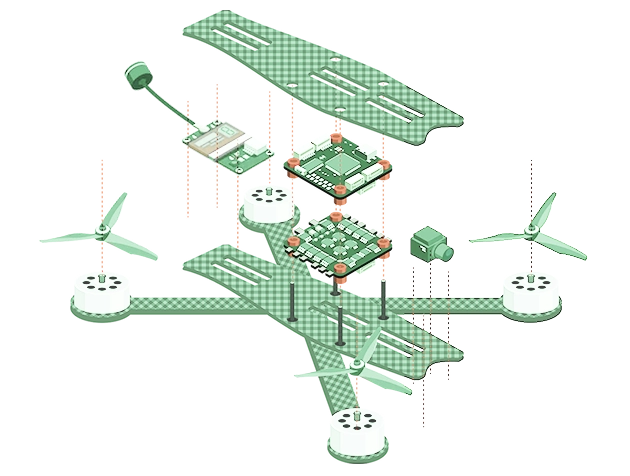
An aircraft starts as a schematic before it flies.
01
Mass: what it weighs and can lift
Every board, battery and sensor is carried. A function that adds weight has to earn its place.
MASS
02
Power: what the electronics may draw
In one flight-stack project the speed-controller design had to handle up to 55 A per channel, which shaped the supply, the layout and the debugging.
POWER
03
Link: what the radio can carry
The path drops, lags and shares the air. In another project a Wi-Fi bridge was prototyped against a required rate of at least 40 Mb/s before the design was committed.
LINK
04
Field: where it is set up and updated
Configuration and updates happen where the aircraft is used, often with no internet. An update has to arrive intact.
FIELD
The air system
One air system, three places
The seams between the places are where drone projects stall.
CarriedThe linkOn the ground
1
AIRCRAFT
carried
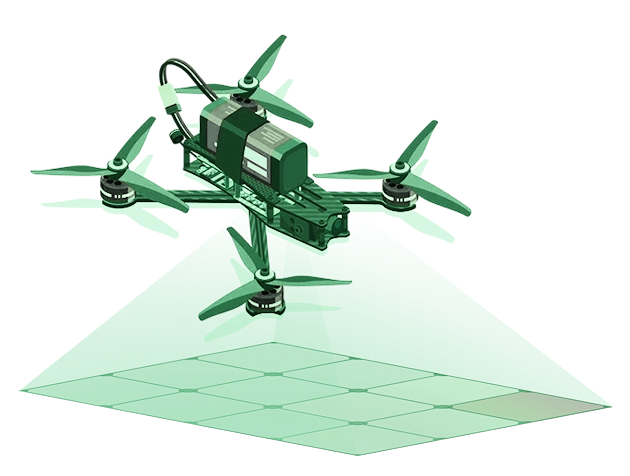
Flight controller, speed controllers, motors, radio and a camera or payload on a frame that sets how much can be carried.
UPDATE New firmware travels the same way in reverse and has to arrive intact.
What has to work together
The seams between the places decide the aircraft
Drone projects fail where two parts designed apart meet in the air.
Inside the aircraft: boards, frame and leads have to fit together.
1
Flight controller × speed controllers × firmware
Two boards that must match an open flight stack. In one project they were designed for Betaflight and BLHeli and brought up through two revisions.
2
Aircraft × cloud × signal loss
When the link drops, aircraft and ground disagree about state. A common design keeps the last known state and reconciles it on return.
3
Firmware × fleet × integrity
An update must arrive intact and be accepted only if genuine. One project delivered a bootloader with update and factory reset; signed updates belong to a reference architecture.
4
Tool × person × field
Setup happens where the aircraft is. A configurator that runs in a browser, offline, over a serial connection, takes setup to the field.
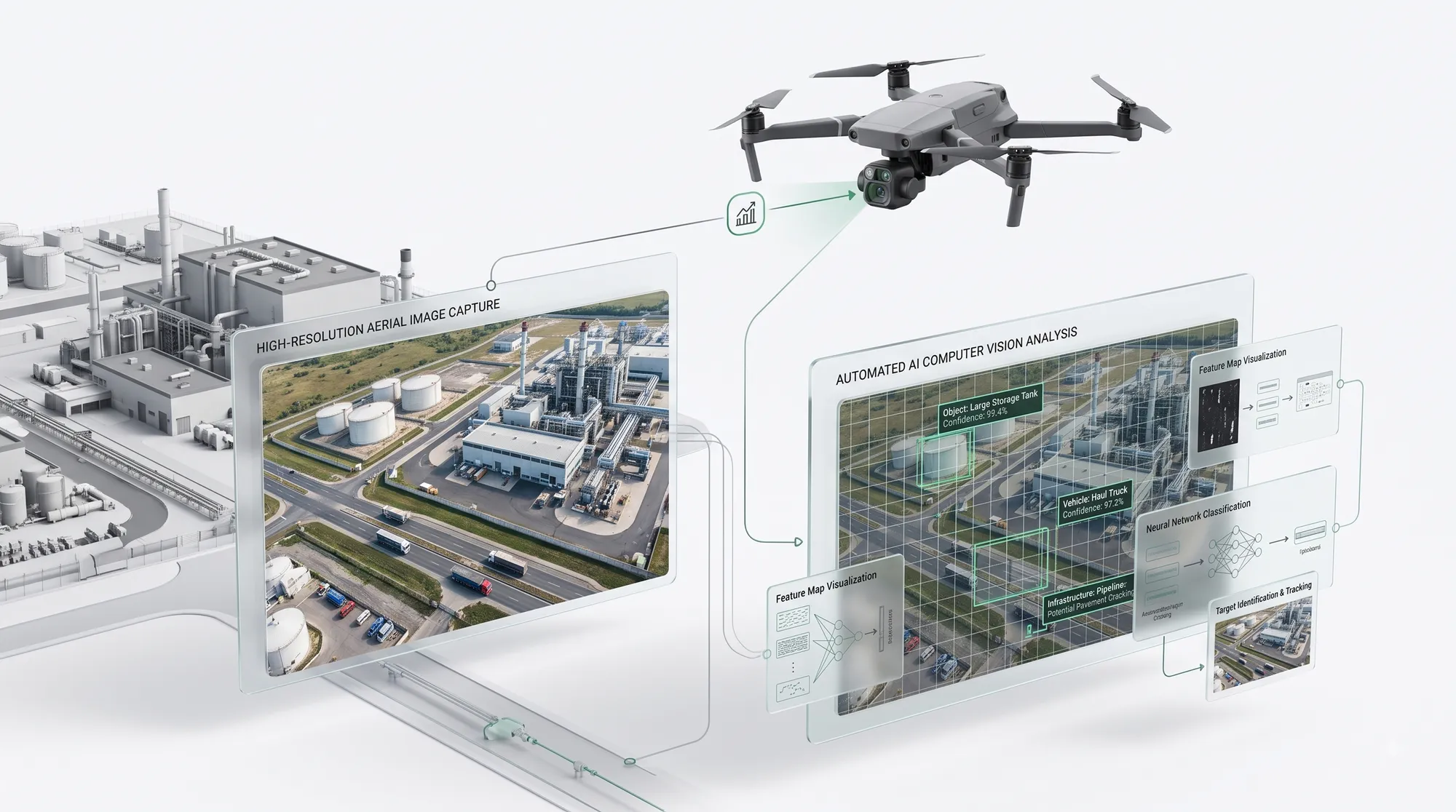
Whether perception runs onboard or in the cloud is a power and link decision first. AI for IoT & Edge AI ↗
Where Indeema joins
Three places to join the work
Projects begin with nothing built, with a concept, or with an aircraft already flying.
01
Electronics and firmware for a flight stack
Boards and firmware compatible with the common open flight stacks, for an aircraft you are designing or want to make manufacturable.
Custom UAV development starts with requirements and a system design, then the boards, firmware and link, proved in a prototype. The documents let your own engineers continue.
03
Connect an aircraft that already flies
Custom drone software for the ground side and the firmware that talks to it: a data link, a configuration tool, telemetry and update delivery.
What this has looked like
Four examples
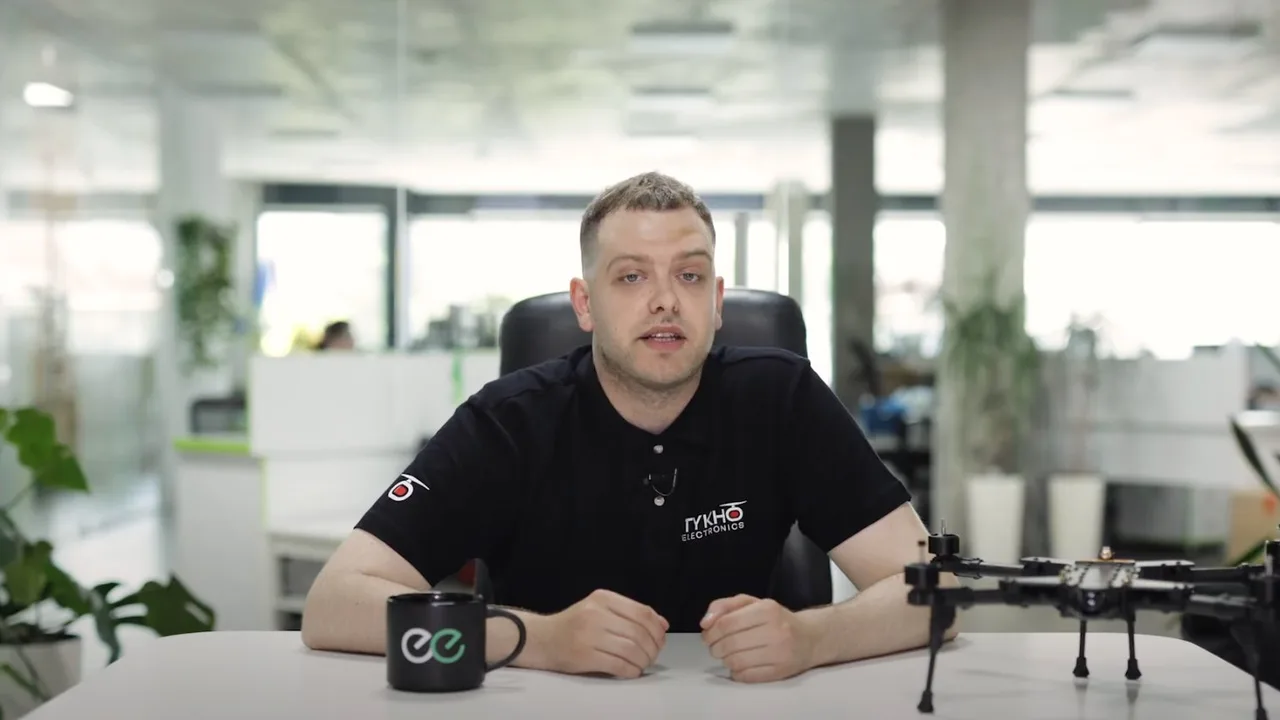
These examples are described without client names. In the video below, one drone-electronics client talks about working with Indeema.
One aircraft, and the engineering around it.
DELIVEREDFlight-stack boards for a 7-inch drone
A client had a drone concept and no hardware, and wanted flight-controller and speed-controller boards that work with the common open flight firmware.
Indeema owned
Requirements; early prototyping of the risky parts; schematics and layout; manufacturing files; bring-up and a second board revision; embedded firmware; testing.
The hard part
Currents of up to 55 A per channel needed a current-limited supply and its own debugging method.
An agricultural-drone maker planned an onboard Wi-Fi data link and needed to know whether a chosen chip could carry the required rate.
Indeema owned
A firmware prototype of a serial-to-Wi-Fi bridge tested against at least 40 Mb/s; a bootloader with update and factory reset; requirement and design documents.
The hard part
Wi-Fi throughput was the limit, so packet size and serial configuration were tuned together.
Client feedback: Tykho Electronics on working with IndeemaDuration
A representative of Tykho Electronics describes working with Indeema on UAV hardware and software.
Free whitepaper
Gap or System? What's Really Stalling Your Drone Program
How to tell a narrow gap from a systemic problem in a stalled drone program, and the five boundary decisions that decide whether it reaches production.
What you'll learn
A test for telling one specific gap from a systemic problem before you restart, re-staff or re-architect
The five boundaries (interface, evidence, replaceability, reuse, knowledge) and the question each one asks
How one decision about a payload, a compute module or a radio moves through power, heat, mass and range
Can one drone developer cover both the hardware and the software?
Within what the examples show, yes. As a drone software company that also designs electronics, Indeema designed flight-stack boards and their firmware for one client, and links, tools and cloud sides for others.
02
What software can you build for a drone?
Aircraft-side firmware, update mechanisms, data links, configuration tools and a cloud side for telemetry. Fleet and mission software are not described here as delivered work.
03
Can you work on an aircraft that already flies?
Yes. We have worked on a data link for an existing design and on a configurator for a client’s flight controller. Scope is settled in a short requirements phase.
04
Do you offer a pre-built drone platform?
We do not sell a finished drone through this page. Each engagement engineers the electronics, firmware, data link and ground tools for your aircraft. For teams building their own aerial or ground drones, Indeema is also developing Aveoni, a drone development platform: Aveoni Studio is available today and its companion computer is in development. aveoni.com ↗
05
How do you use AI in drones?
Where an aircraft acts on its own, that is a question about authority, not only models; see the page linked below. Where perception runs, on the aircraft or in the cloud, has power, link and update consequences.
Where this page stops
When the question is how much the aircraft decides
Some aircraft only need the four budgets met. Others must also act on what they sense without waiting for a person. That is a question about authority, fallback and supervision, and it applies to any machine. It has its own page, which also lists our CTO’s peer-reviewed research on how a machine moves safely around what it senses.
Optional analytics uses Google Analytics through Google Tag Manager, and optional advertising uses Google Ads, Microsoft Advertising, LinkedIn and Meta, each only after you allow it.
With analytics allowed, HubSpot also records the pages you visit on this site, so that if you contact us or request a resource our team can see how you found us.
Your choice is remembered in this browser for 180 days. You can change it at any time in Privacy settings.