


Expertise / Applications
Custom web development services for connected products and platforms
Indeema provides custom web development: prototyping and design, front-end and back-end development, APIs, databases, cloud deployment, DevOps and testing. Much of our web work is the interface of a connected product, such as dashboards, customer and installer portals and admin tools that show device data in the browser, alongside business web platforms built from scratch.
Overview
Custom web development explained
Web is the new normal. Indeema helps get a web project up and running in a short time and keeps it productive as it grows, from a focused portal to a multi-role platform. When we start a project we ask two things: how to give end users the best experience, and which platform, tools and technologies make the project efficient yet cost-effective. We work by Lean Customer Development, testing assumptions with real users early so the product is built around what they need.
Custom web development means creating a website or web application around your users, brand and business processes rather than adapting a template. Besides its own design, a custom web solution has functions built for the way your users work, which keeps it efficient as requirements change.
A functional, user-friendly website or web application gives users a rewarding experience and helps a product stand out from the competition. Our team can build a custom web solution from scratch or extend and modernize your existing website or web application.
Services
Our web development services include
Seven services that cover a web application from the first prototype to tested releases. Engage us for one of them or for all of them.
Prototype & Design
User engagement comes first, so we establish and simplify the UX before anything else, making even complex, multifunctional products easy to use. We build an interactive prototype with every interaction clickable, then enrich it with the visual UI. We can also implement or adjust your existing design.
UI/UX design for connected systemsCloud hosting and deployment
A secure, flexible and manageable website or application your users can reach anytime and from anywhere. From static websites to multi-tier web applications, we help select the cloud platform, set up or migrate the environment and deploy the project, usually on AWS or Azure.
Cloud & Connected SystemsFront end development
Building user interaction from the design: the look, feel and behavior of the site or app. We use current frameworks such as Angular and React for smooth performance and reliability, and can implement your own design, add new features or improve existing front-end functionality.
Back end development and APIs
Behind the scenes of any web solution, the back end decides how users complete their tasks and get results: data storage, update and retrieval, business logic, security and integration with APIs and servers. We use established stacks and build our own components where a complex project needs them.
Databases
A robust and efficient database matters most when a project holds a lot of diverse data: a well-structured database lets you find the needle in the haystack quickly. We take the scale and workload into account to design the best fit for the project.
DevOps for web applications
Infrastructure that is well placed, tested and automated keeps every part of the application running smoothly. We set up continuous integration and delivery, containers and monitoring, and choose a setup that scales and distributes load sensibly, which keeps deployment costs under control.
DevOps for connected productsTesting
Quality is essential. We test each solution with automated and manual tests at every development stage, so that what reaches users is clear, secure and predictable. Defects found in a sprint are fixed before the functionality moves on to the beta server.
Front-end development
Front-end development
The front end is what users see and touch. Our front-end work builds interfaces that stay fast, consistent and clear on every screen and browser your users have.
Responsive and adaptive design
Layouts that fit phones, tablets and desktop screens on different operating systems, with optimized production builds so pages load quickly on mobile phones and PCs.
Angular and React development
Single-page applications on the two frameworks our case projects use, chosen per project for functionality, maintainability and scalability.
Cross-browser development
Web solutions that work the same way, and smoothly, on current desktop and mobile browsers, tested on the browsers your users actually use.
Dashboards and charts for device data
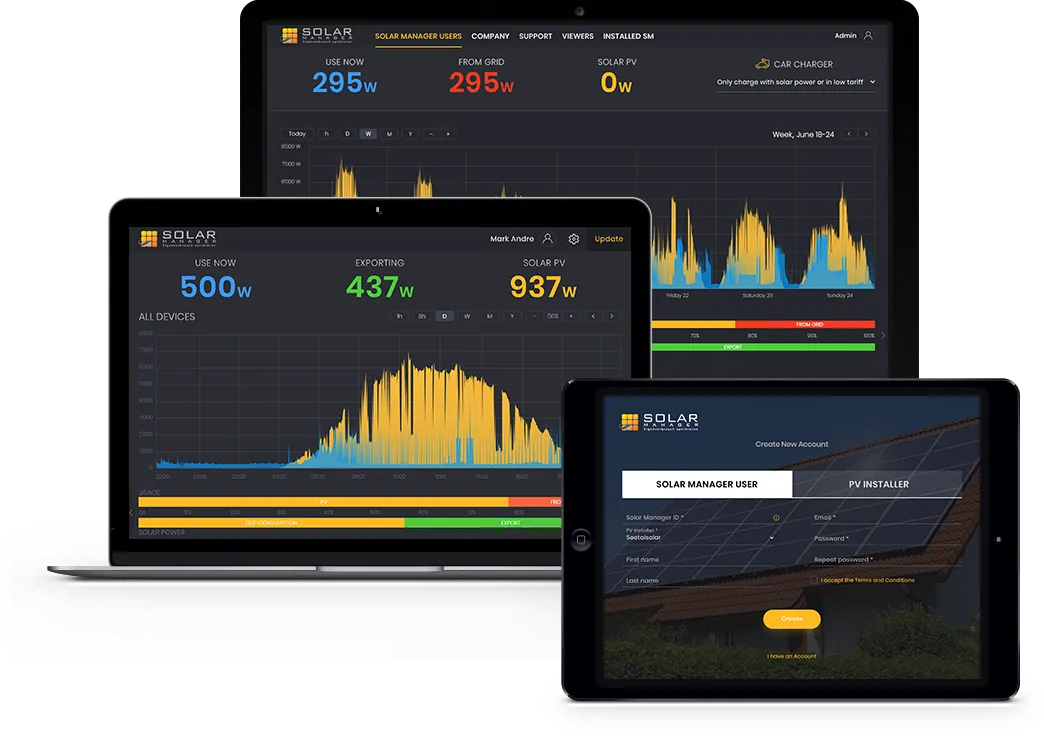
Charts and dashboards that show readings, trends and device status, including live values streamed to the browser, so the whole picture is visible at a glance.
Roles and permissions
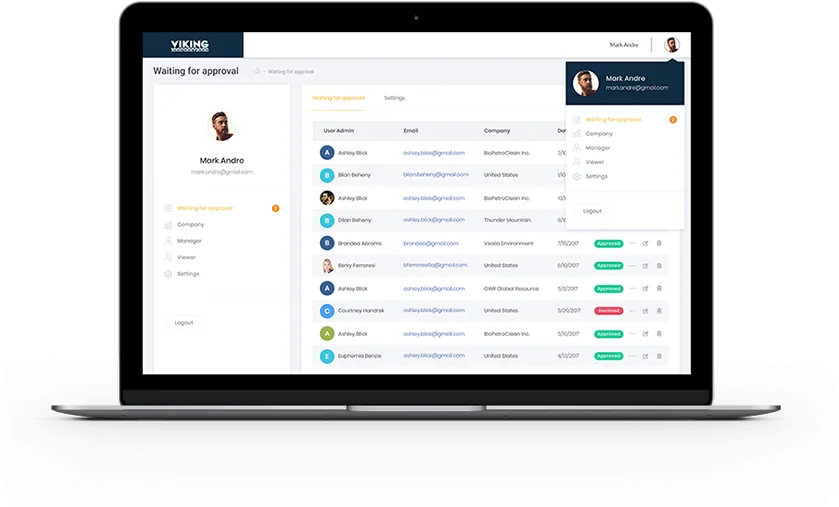
Different views and actions for each role, such as end users, installers, support staff and administrators, enforced in the interface and in the back end.
Payment integration
Subscription and payment flows connected to a payment provider, such as Stripe subscriptions in a multi-role B2B web portal we built.
Back-end development
Back-end development and APIs
The back end stores and organizes data, runs the business logic, secures access and serves the front end and other clients through APIs. In common language, it is the brains of a solution.
Web application back ends
Server-side logic for web portals and large multi-role platforms, built to handle growing load and to stay maintainable as features are added.
Back ends for mobile apps
User registration, login, data sharing and sync across platforms and devices for the mobile apps that share the platform with the web application.
API development and integration
Custom APIs that open your software to other applications, and integration of third-party tools and services, documented (for example with Swagger) so partner and internal teams can build on them.
Back ends for connected devices
Services that receive device data, store readings and send commands to the field. Device connectivity, telemetry pipelines and fleet operations are covered by Cloud & Connected Systems.
Custom back-end development
A back end tailored to your idea, requirements and budget, from the data model and business rules to deployment.
Back-end refactoring and architecture review
A review of an existing back end, then staged refactoring to improve performance, rebuild the architecture or upgrade the code, while the front end stays intact if needed. It reduces unexpected technical costs later.
Databases
Databases behind the web application
Databases are part of most web projects we deliver: we design the data model, build the code around it and keep queries fast as data grows. Accounts and transactions usually go into a relational database, flexible records and device data into a NoSQL store, with a cache in front where the interface needs fast lookups.
For database design, migration, testing and optimization as a service in its own right, see custom database development. For device data ingestion and telemetry pipelines at fleet scale, the work joins our cloud engineering.
Process
Our custom web development process
Discovery and concept
A kick-off meeting, then we gather the information needed for analysis, study the requirements and documentation, write acceptance criteria, send an estimate and agree the scope with you. Development starts once the scope is clear.
Development and testing
We set up CI/CD and a development server, build in sprints, and move each tested sprint’s functionality to a beta server for your review.
Deployment and maintenance
We schedule the release day with you, back up the system before any production change and make sure the previous state can be restored. After a smooth release we can hold a review session and continue with maintenance and product support as the product grows.
Architecture and trade-offs
Which choices shape a web application?
Most of the cost of a web application is decided by a few early choices. We make them with you, from the users, the data and the code you already have.
Front-end framework
What decides it: Existing code and team, the number of interactive views, and long-term maintenance
Back-end stack
What decides it: The existing system, integrations and hosting platform; we extend what works rather than rewrite it
Data store
What decides it: Consistency needs, data shape, query patterns and growth; many platforms use both
Live data in the browser
What decides it: How fresh each view must be and how many users watch at the same time
Hosting
What decides it: Where the rest of the product runs, regulatory requirements and operating costs
In a connected product these choices are made together with the device and cloud layers: see Cloud & Connected Systems and IoT product engineering.
Technologies
Web technologies we use
The stack follows the product and the code that already exists. Tools without a case page here, such as PostgreSQL or Python web frameworks, are options we evaluate per project.
React
Front endSingle-page applications and live dashboards, with Redux or RxJS for state and data streams.
In practice: A web service for monitoring and configuring residential solar systems · Extending a SCADA product with cloud monitoring and gateway updates
Angular
Front endMulti-role portals, doctor and admin panels.
In practice: A web platform for aesthetic practice loyalty and referral programs · Sensocor: from a Bluetooth heart-signal sensor to a doctor's web portal · A lift energy and trip monitor, from meter interface to web portal · Mobile and web apps for learning marching-band drill on the field
Node.js with Express, Hapi or Strapi
Back endAPIs, business logic and content management for web and mobile clients.
In practice: A web platform for aesthetic practice loyalty and referral programs · Extending a SCADA product with cloud monitoring and gateway updates · A lift energy and trip monitor, from meter interface to web portal · Mobile and web apps for learning marching-band drill on the field
.NET
Back endBack ends on Azure with documented REST APIs.
In practice: Sensocor: from a Bluetooth heart-signal sensor to a doctor's web portal · Taking over the cloud, web and mobile software for Dol-Sensors farm sensors
PHP
Back endExisting back-end services maintained and improved, with Swagger documentation.
In practice: Scaling an OpenADR demand-response platform on AWS serverless
MongoDB and Redis
DatabasesDocument storage for flexible records, with Redis for caching and fast lookups.
In practice: Extending a SCADA product with cloud monitoring and gateway updates · A lift energy and trip monitor, from meter interface to web portal · Mobile and web apps for learning marching-band drill on the field
SQL databases: MySQL and Azure SQL
DatabasesRelational storage for accounts, transactions and calculated indicators.
In practice: Scaling an OpenADR demand-response platform on AWS serverless · Sensocor: from a Bluetooth heart-signal sensor to a doctor's web portal · Taking over the cloud, web and mobile software for Dol-Sensors farm sensors
Socket.io and WebSockets
Real-timeLive values pushed from the back end to the browser.
In practice: A web service for monitoring and configuring residential solar systems · Mobile and web apps for learning marching-band drill on the field
Docker and GitLab CI
DeliveryContainerized environments and automated build and deployment pipelines.
In practice: Extending a SCADA product with cloud monitoring and gateway updates
Connected products
Where web development fits in a connected product
In a connected product the web application is one layer of a single system: device, firmware, connectivity, cloud, data and the interfaces people use. Customer portals, installer and admin tools and dashboards for device data are the usual web deliverables. These are the questions to settle before scope is fixed.
Identify the audiences of the web layer
Customers, installers, operations staff and administrators need different views and permissions. Define each role, what it may see and change, and how access is granted and removed.
Decide how data reaches the browser
Telemetry can arrive by polling, server-sent events or WebSockets, and history may need aggregation. Choose per view how fresh the data must be and what the user sees when it is delayed.
Separate front end, back end and device interfaces
Agree the API boundaries between the browser, the application back end and the device or cloud services, and how those interfaces are versioned as devices in the field age.
Plan for scale and security early
Authentication, authorization, audit trails, rate limiting and data retention are harder to add after launch. List the requirements that come from the data and the customers before choosing the stack.
Integrate with existing systems
Web applications often connect to ERP, CRM or analytics tools. Identify the systems, the direction of data flow, who owns each interface and what happens when one is unavailable.
The rest of the stack
- Applications & Experience The whole application layer of a connected product: mobile, web and design.
- Cloud & Connected Systems The services and APIs the web application talks to.
- Embedded & Firmware The device side of the data the web application shows.
- IoT Product Engineering Device, cloud and applications as one scope.
Industries
Custom website development services by industry
Our web applications serve products in these industries. Each is backed by a case page below.
Solar and energy
Web services for PV monitoring and energy distribution, and back-end APIs for a demand-response platform.
Oil and gas
A web IIoT portal with sensor dashboards and remote updates for field SCADA units.
Healthcare
A multi-role loyalty and referral platform for practices, and a doctor portal for a cardiac sensor.
Agriculture
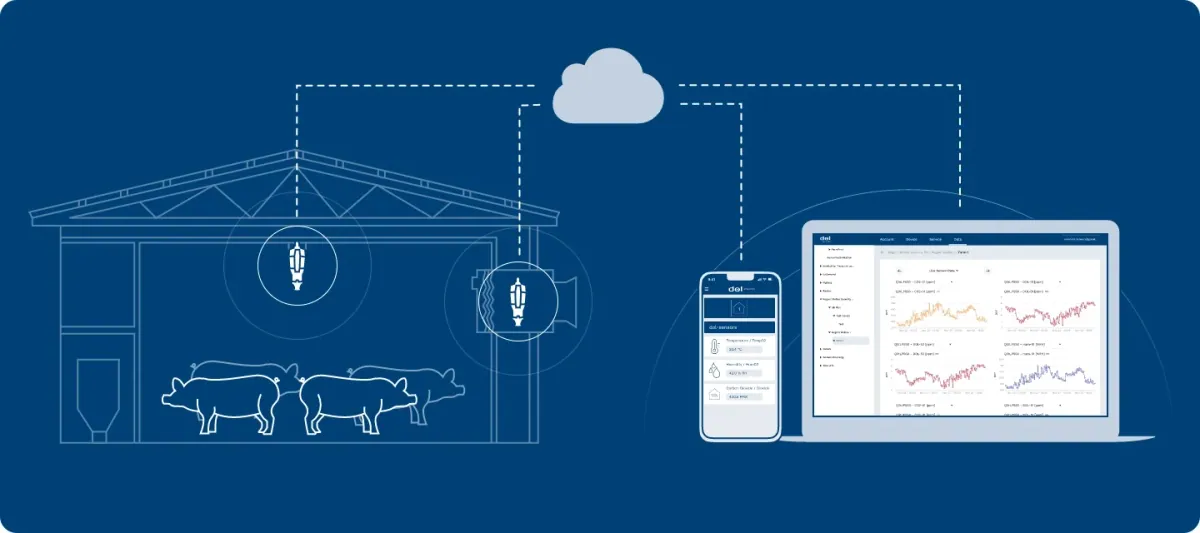
A web portal and Azure back end for farm climate and weight sensors.
Smart buildings
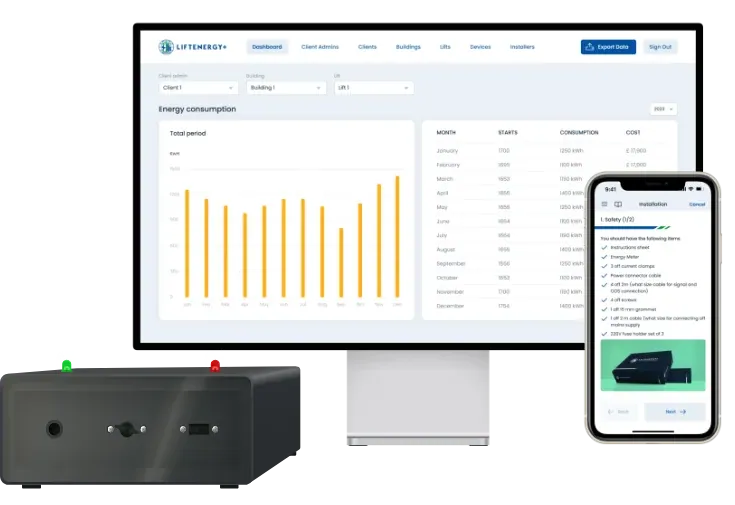
A per-lift web portal for energy use, trips and out-of-service periods.
Industry pages
- Solar and wind Connected products for renewable energy.
- Oil and gas Field monitoring and industrial systems.
- Healthcare Medical devices and care software.
- Agriculture Farm sensing and monitoring.
- Smart homes and buildings Connected buildings and home systems.
Why Indeema
Why choose Indeema Software for your custom website development
Broad professional expertise
Our developers have built web applications for energy, industrial, healthcare and agriculture products as well as B2B platforms, always with your business goals and requirements in mind.
End-to-end web development services
From concept to launch: business analysis, market research, design, development, deployment and continuous maintenance and support, with firmware and cloud engineers in the same company when the product includes devices.
Focusing on your success
We approach web design and development with your goals and business problems in mind, and keep each phase, from planning to post-launch support, a step toward them.
Professional web design service
Our UI/UX designers turn complex business logic into convenient, easy-to-use web interfaces that address your users’ needs.
Case studies
Web applications Indeema has engineered
Five web projects described on our case pages, covering front end, back end and databases. Figures are not shown here.
React · Socket.io · Highcharts
Real-time web service for solar energy
A web application with a real-time dashboard of PV production, consumption, export and import, energy-distribution settings, role-based accounts for users, installers and support staff, and firmware updates for connected devices started from the interface.
A web service for monitoring and configuring residential solar systems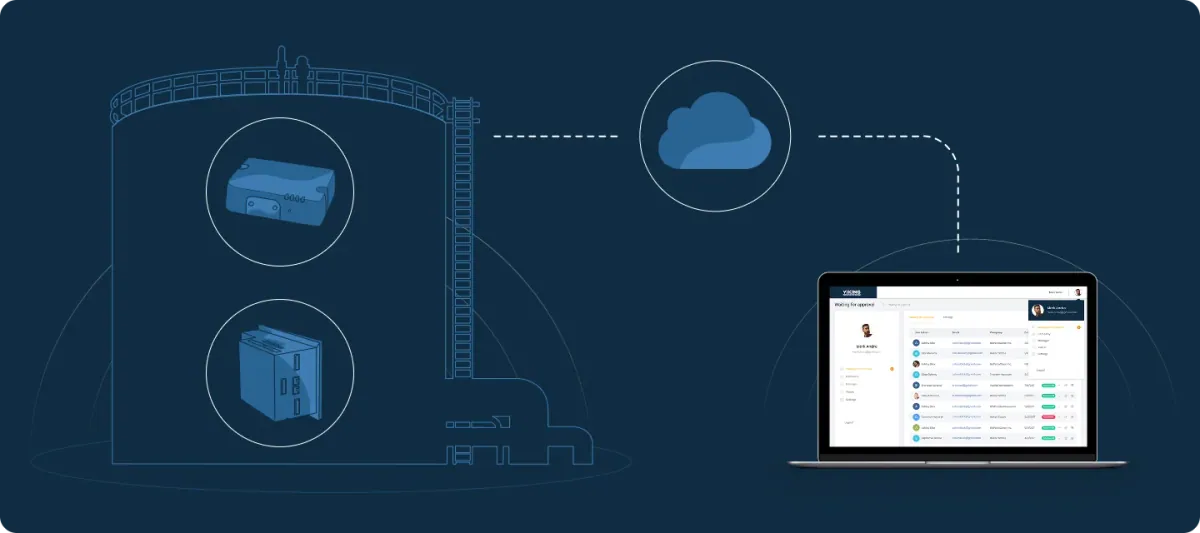
React · Node.js · MongoDB
Web IIoT portal for SCADA units
A redesigned web portal for oil, water and gas field equipment: user-built sensor dashboards, real-time node status and over-the-air updates launched from the browser, with data received through a cellular gateway API and stored in a cloud database.
Extending a SCADA product with cloud monitoring and gateway updates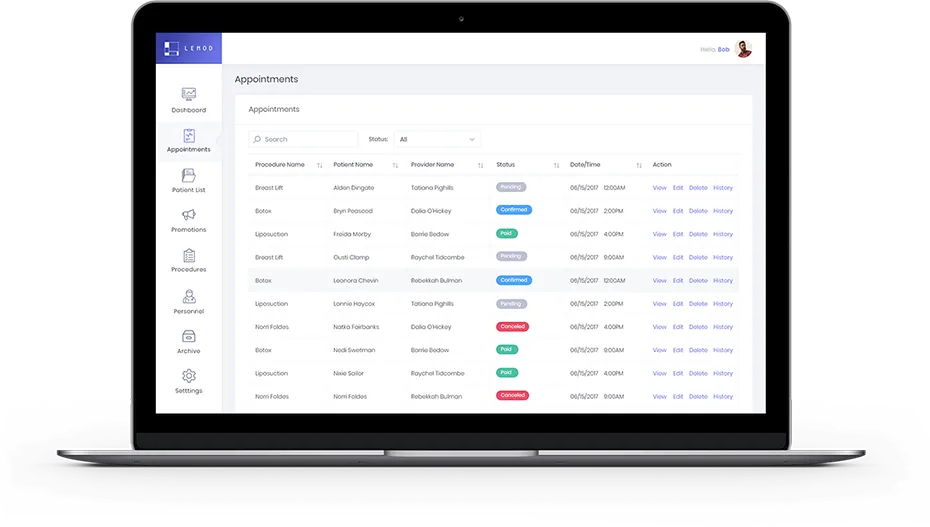
Angular · Node.js · Stripe
Multi-role B2B web platform
An Angular web application with a Node.js and Express back end, MongoDB storage and Strapi-managed content: per-role permissions, automatic reward calculations, Stripe subscriptions and an API for mobile apps.
A web platform for aesthetic practice loyalty and referral programs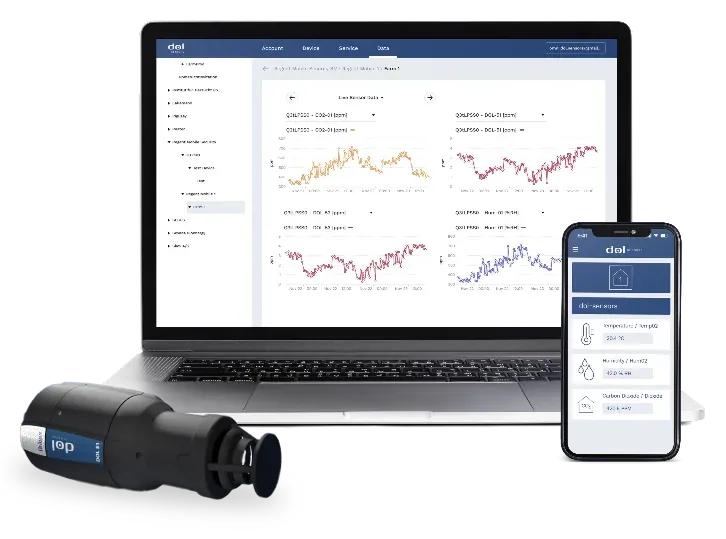
.NET · Azure SQL · Cosmos DB
Web portal on an Azure back end
Indeema took over and improved an existing web portal and .NET back end on Azure for farm sensors. Azure SQL Database holds customer accounts; Cosmos DB holds sensor data and configurations.
Taking over the cloud, web and mobile software for Dol-Sensors farm sensors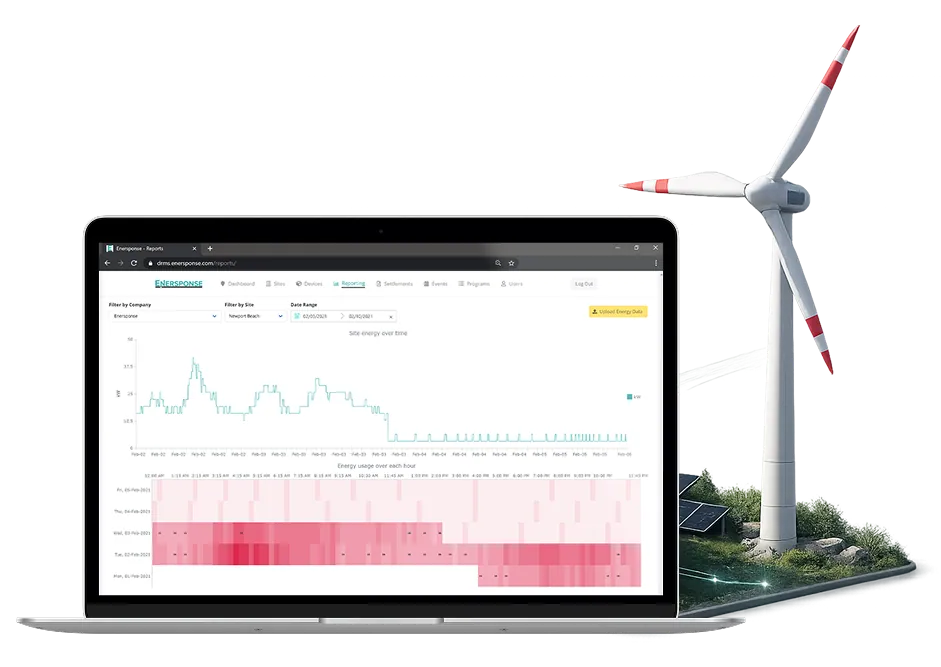
PHP · Swagger · MySQL
Back-end APIs for an energy platform
Improvements to the PHP back-end APIs and web services of an existing demand-response platform on AWS: utility integrations, event management and monitoring endpoints, documented with Swagger, with MySQL on Amazon RDS.
Scaling an OpenADR demand-response platform on AWS serverless
Related engineering insights
- Why Node.js suits IoT projects Node.js for connected systems, choosing a database for IoT and real-time analytics.
- IoT solution anatomy The tiers of a remote IoT system, from sensors and gateways to the applications people use.
FAQ
Web development questions
Do you provide maintenance services after the launch of the custom website?
Yes. After launch we can take on maintenance and support: monitoring, bug fixes, security and dependency updates, backups and new features as the website or web application grows. Every release follows the same routine as the first, with a backup and a way to restore the previous state. Read more about maintenance and product support.
What makes your company different from the rest?
We combine web engineering with the rest of a connected product. The same company designs devices, firmware and cloud services, so a dashboard, portal or admin tool is planned together with the data it shows. For business platforms without devices we bring the same discipline: UX first, clear scope and acceptance criteria, CI/CD and tested releases.
Do web developers at Indeema Software have experience in building industry-specific web applications?
Yes. Our case pages include web applications for solar energy management, oil and gas field monitoring, demand response in the energy grid, farm sensor monitoring and a B2B loyalty platform for healthcare practices. Web applications for connected products deal with large volumes of data, frequent communication with devices, security and interfaces that change in real time.
What is the most suitable tech stack for front-end development?
It depends on your goals, the existing code and how the product will scale. During discovery we define the project’s specifics and then choose the stack. In our case projects that has usually meant Angular or React, with charting and real-time libraries where the product shows live data.
What technology do you consider the best for back-end development?
There is no single best technology, only the best one for your project. We analyze the requirements, the existing system and the hosting platform, then choose the stack. Our case projects use Node.js with Express, Hapi or Strapi, .NET on Azure and PHP services on AWS.
Can you take over and modernize an existing web application?
Yes. We start with a code and architecture review, then refactor or rebuild in stages, so the front end can stay intact while the back end changes, or the reverse. Our case pages include an existing web portal and Azure back end we took over and improved, a SCADA web portal we redesigned and an energy platform whose back-end APIs we improved.
Tell us about your project
Start with who will use the web application and what data it shows
A first conversation covers the users and their roles, the data and the systems to integrate, not a technology pitch.
Bring us
- Your idea, or the existing website or web application and its code
- Who will use it, and what each role needs to see and change
- The devices, data sources or business systems it connects to
- The part you want Indeema to own
Related services
- Cloud & Connected Systems When the web application sits on device data and cloud services.
- UI/UX design for connected systems When the interface needs research and design first.
- DevOps When releases, environments and monitoring need an owner.
- Applications & Experience When the product also needs mobile apps.
- Custom database development When the database itself needs design, migration or optimization.
- Maintenance and product support When an existing web application needs an owner after launch.