

Oil & gas field equipment / SCADA platform extension
IoT web application and gateway provisioning for remote SCADA unitsBrownfield platform extension: web, gateway software, cloud and DevOps
Extending a SCADA product with cloud monitoring and gateway updates
VikingSCADA provides a SCADA application that gives operators in the oil, water and gas sectors field data, reports and alerts. The product already had a desktop application, RF SCADA sensor boards and hardware units installed at end users' sites. The vendor wanted a web application that could collect and store data from those field devices and present it to its customers.
Add an IoT web application to the existing SCADA system: receive sensor data from field units through cellular gateways, store it in the cloud, let users build dashboards and see node status, and replace a complicated firmware installation and configuration routine with a simpler provisioning and update path.
- Product
- IoT web application and gateway provisioning for remote SCADA units
- Buyer
- SCADA and industrial-monitoring vendors adding cloud and web access to an existing product
- Engagement
- Brownfield platform extension: web, gateway software, cloud and DevOps
- Indeema scope
- Discovery and specification, Gateway configuration and provisioning, Web application, Update pipeline and operations
The product need
What had to become possible
Add an IoT web application to the existing SCADA system: receive sensor data from field units through cellular gateways, store it in the cloud, let users build dashboards and see node status, and replace a complicated firmware installation and configuration routine with a simpler provisioning and update path.
Ownership, made clear
Where the work started and what Indeema owned
Starting system
Desktop SCADA application
VikingSCADA already had a desktop application, which the team analysed before proposing the web product.
Field hardware
Hardware units and RF SCADA sensor boards were already installed at end users' oil, water and gas sites.
Platform direction
The client supplied a preliminary vision of the upgraded architecture, initial web-app requirements, end-user requirement documents and access to its IoT platform accounts.
Indeema owned
Discovery and specification
Review the available hardware, the web processing requirements and cloud pricing models on AWS and Azure; analyse the desktop app and propose a step-by-step guide for adding users and devices; produce the project structure and release plan.
Gateway configuration and provisioning
Write the provisioning scripts: Lua on LTE gateways in the first phase and Python on industrial PCs in the second, with automated first-boot provisioning that gives each device unique credentials and settings.
Web application
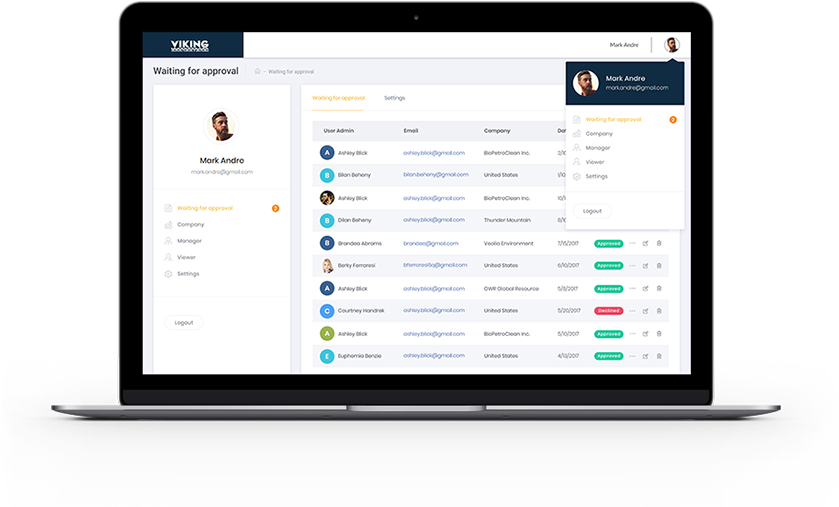
Redesign and build the web portal: user-built sensor dashboards, sensor widgets, real-time node status and device-update notices.
Update pipeline and operations
Package the gateway software in Docker, reduce the image size, and set up an automated pipeline that publishes new images to cloud storage for update from the web interface. Maintain the application with patches, monitoring and backups.
Worked with
Cellular gateway API
The web application receives sensor data from VikingSCADA PLC devices through the API of the RV50 cellular gateway.
Industrial PC nodes
Firefly EC-A3399C industrial PCs act as field nodes in the second phase and receive software image updates launched from the portal.
Cloud data store
Incoming sensor data is stored in a cloud database that feeds the dashboards.
Product constraints
What made the engineering difficult
- 01
Fit a web product to installed equipment
The new application had to work with hardware units and RF sensor boards already deployed in the field, not with a clean-sheet device design.
- 02
Make provisioning simple without weakening it
Before the project, firmware installation and configuration was complicated and slow. Each new device still needed its own credentials and settings.
- 03
Ship gateway updates continuously
The gateway software image had to be small enough for continuous delivery to remote devices in the field.
- 04
Test hardware and software together
Communication between the field hardware and the web software was a delivery risk that remote testing alone would not catch.
Engineering judgement
Decisions that shaped the product
Phase the gateway layer
Start with Lua scripts on LTE gateways, then move to Python on industrial PCs in a second phase.
Provision on first boot
An automated provisioning step assigns unique credentials and settings when a device first starts, replacing manual per-device setup.
Containerise the gateway software
Docker gives the gateway software the same runtime on every device; the build drops unneeded dependencies and files and compresses assets to shrink the image.
Keep a hardware bench in the office
An on-site test environment with multiple node devices let the web and embedded engineers debug hardware-software communication together.
Product system
How the product moves from signal to user
- 01
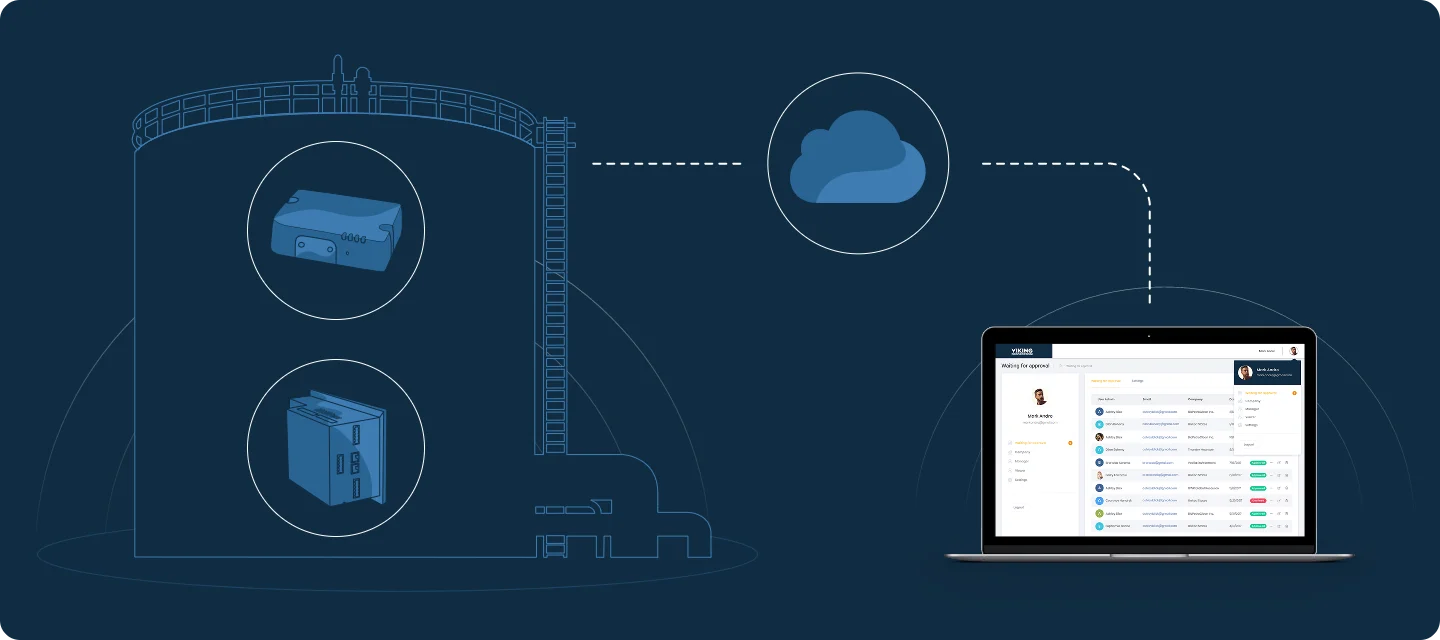
RF SCADA boards and PLCs
VikingSCADA field hardware measures equipment at oil, water and gas sites.
- 02
Cellular gateway / industrial PC
Lua scripts on LTE gateways, later Python on industrial PCs, collect and forward the sensor data.
- 03
Cloud API and database
The web application receives data through the gateway API and stores it in a cloud database.
- 04
Web portal
Users build sensor dashboards, follow node status and see available device updates.
- 05
Update pipeline
New Docker-packaged gateway images are published to cloud storage and launched on selected nodes from the portal.
Delivered product capability
What the product can do
- 01
Sensor dashboards
Users create dashboards that visualise the sensors on their hardware and monitor them through the web.
- 02
Real-time node status
The portal shows the live status of field nodes alongside sensor widgets.
- 03
Remote software updates
Users are told when a device update is available and can launch an over-the-air update on a selected node from the web interface.
- 04
Unified provisioning tool
Firmware installation, configuration and network connection for field devices run through one tool.
Product change
What changed for the product team
VikingSCADA moved from a desktop application with a basic web portal and a manual device set-up routine to a redesigned web portal with sensor widgets, real-time node status and remote software updates for its field gateways and industrial PCs.
For a vendor whose equipment is already in the field, the case shows how to add cloud data, web dashboards and a supervised update path without replacing the installed hardware, and how to phase the gateway layer as the product moves to new node hardware.
- Field devices are provisioned, configured and connected through one tool instead of a manual installation routine.
- Operators can view sensor data and node status in the web portal and launch software updates on selected nodes remotely.
Product evidence
A closer look at the product
Technology, in context
JavaScript · React · RxJS · Node.js · MongoDB · Mongoose · Redis · Strapi · Lua · Python · Docker · GitLab CI · RV50 cellular gateway · Firefly EC-A3399C industrial PC
A comparable product problem?
VikingSCADA field monitoring web app
Bring the product context, the system that already exists and the engineering decision you need to make.