


Insights / Embedded & Firmware
Cyber Resilience Act Requirements: What Changes for Connected Device Makers
The EU Cyber Resilience Act turns device security into a condition for the CE mark. What it asks of firmware, updates and vulnerability handling, and what to start on now.

The short answer
The Cyber Resilience Act (CRA) is the EU regulation that makes cybersecurity a condition for selling any product with digital elements on the EU market, from a smart lock to an industrial sensor. Manufacturers must ship without known exploitable vulnerabilities, with a secure default configuration, a way to deliver security updates for a defined support period, a software bill of materials and a process for reporting actively exploited vulnerabilities. Reporting applies first, from September 2026, and the main obligations follow in December 2027. For a device maker, most of the work lands in firmware, the update path and the release process, not in paperwork.
Key takeaways
- The CRA covers almost every connected product sold in the EU, and compliance shows through the CE mark.
- Vulnerability reporting comes first, before the main obligations, so the reporting process is the earliest deadline to plan for.
- Secure updates, a support period and an SBOM are now legal requirements, not just good practice.
- Most devices can self-assess; some product classes need a third party or harmonised standards.
- Devices designed today will still be on sale when the main obligations apply, so the design decisions are due now.
What the Cyber Resilience Act is
- Cyber Resilience Act (CRA)
- The Cyber Resilience Act is the EU regulation that sets cybersecurity requirements for hardware and software products with digital elements, and makes meeting them a condition for placing those products on the EU market.
The European Commission puts it plainly: products must meet the requirements before they are sold in the EU, they carry the CE marking to show it, and national market surveillance authorities enforce it. For connected devices, that changes what security is. It used to be a feature for the brochure. Now it decides whether the product can be sold at all.
The scope is wide. A product with digital elements is any hardware or software that connects, directly or indirectly, to a device or a network. That covers consumer smart home devices, wearables, gateways, industrial sensors and the apps and firmware that run them. Medical devices, vehicles and some other products under their own sector rules sit outside it.
We covered how the CRA sits next to the NIS directive and the main ETSI and IEC security standards in our overview of IoT security regulations. Here we go one level down, to what the CRA asks of the device and of the team that builds it.
Cyber Resilience Act timeline: the dates that matter
The CRA entered into force on 10 December 2024. The main obligations introduced by the Act will apply from 11 December 2027, with reporting obligations to apply as of 11 September 2026.
Provisions on notifying conformity assessment bodies apply from 11 June 2026, so the bodies that will certify higher-risk products are being set up now.
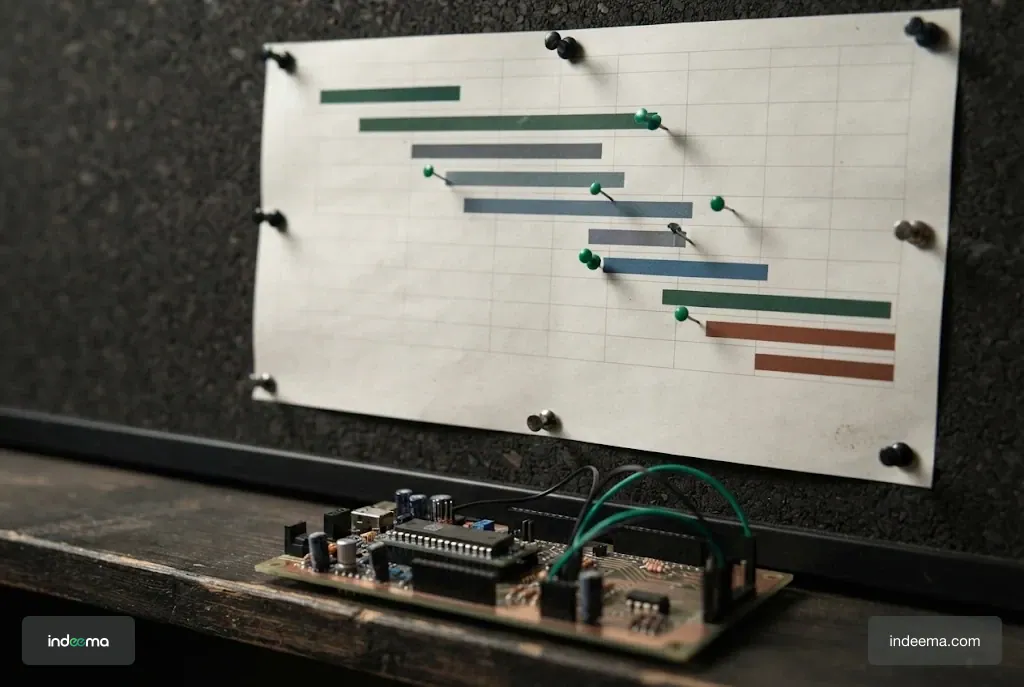
The order matters more than the exact dates. Reporting of actively exploited vulnerabilities applies to products already on the market, including those sold before the main obligations start. A team that has no way to learn about exploited vulnerabilities in its fleet, or no one on call to file a report, is exposed from the first deadline, not the last.
Product cycles make the rest urgent too. Hardware frozen in the next few months will often still be on sale years from now, and what its update path, secure boot and logging can do is fixed at design time.
What the CRA requires from the device
The essential requirements in Annex I of the Regulation split into two parts: properties of the product, and how the manufacturer handles vulnerabilities. Translated into engineering work, the product requirements look like this.
| CRA requirement (Annex I, Part I) | What it means in a connected device |
|---|---|
| No known exploitable vulnerabilities at release | Scan firmware, libraries and the OS image before each release; track third-party components |
| Secure by default, with a reset to original state | No shared default passwords, unused services off, a factory reset that really clears secrets |
| Vulnerabilities fixable through security updates | A signed update path that works in the field, automatic where it fits, with user notification and a postpone option |
| Protection from unauthorised access | Per-device identity and credentials, authenticated debug and service interfaces |
| Confidentiality and integrity of data, commands and configuration | Encryption in transit and at rest, signed configuration, secure boot that rejects modified images |
| Data minimisation | Collect and keep only what the product's purpose needs |
| Availability, also after an incident | Watchdogs, rate limits, and a device that degrades safely instead of failing completely |
| Limited attack surface and impact | Closed debug ports in production, least-privilege processes, memory protection where the MCU offers it |
| Security logging with an opt-out | Record access and changes to data, services and functions |
| Secure removal of data and settings | A wipe that removes user data and keys permanently |
Teams that already build connected products well will recognise most of this list. The difference is that every line now needs evidence in the technical documentation, and a gap can keep the product off the market.
Vulnerability handling, SBOM and support period
The second part of Annex I covers the manufacturer's process. Manufacturers must identify and document vulnerabilities and components, including by drawing up a software bill of materials in a commonly used and machine-readable format covering at the very least the top-level dependencies.
They must also fix vulnerabilities without delay, test security regularly, publish information about fixed vulnerabilities, run a coordinated vulnerability disclosure policy with a contact address for reports, and distribute updates securely. Where technically feasible, new security updates shall be provided separately from functionality updates.
Treat the support period as a design input, not something to settle after launch. The support period shall be at least five years; where the product is expected to be in use for less than five years, it shall correspond to the expected use time. Each security update made available during the support period must remain available for a minimum of 10 years or for the remainder of the support period, whichever is longer.
Reporting actively exploited vulnerabilities
Reporting applies first. A manufacturer notifies any actively exploited vulnerability in its product simultaneously to the CSIRT designated as coordinator and to ENISA, through a single reporting platform.
The timing is strict: an early warning within 24 hours of becoming aware of an actively exploited vulnerability, a vulnerability notification within 72 hours, and a final report no later than 14 days after a corrective or mitigating measure is available.
Severe incidents that affect the security of the product follow the same early warning and notification steps, with a final report within one month after the incident notification.

What a team needs before reporting starts
- A public contact address and a coordinated vulnerability disclosure policy
- A way to learn that a vulnerability in your device or one of its components is being exploited
- An SBOM per firmware release, so you know which devices carry the affected component
- A named person and a backup who can file the early warning outside office hours
- A tested path to build, sign and ship a fix to the affected fleet
Conformity assessment: self-assessment or third party
Most products can be assessed by the manufacturer itself through internal control. The Commission notes that most products, such as household appliances, computer games or mobile applications, fall into this category.
Products listed in Annex III as important need more. Class I includes, among others, routers and modems, operating systems, microcontrollers and microprocessors with security-related functionalities, smart home products with security functionalities such as smart door locks, security cameras and alarm systems, connected toys and wearables for children or health monitoring. A class I product can still be self-assessed if the manufacturer fully applies harmonised standards or an appropriate certification scheme; otherwise a third party is involved.
Class II, which includes firewalls and tamper-resistant microcontrollers, always needs a third-party procedure. Critical products in Annex IV, such as smart meter gateways and secure elements, may be required to hold a European cybersecurity certificate.
The penalty for not meeting the essential requirements or the reporting obligations reaches up to EUR 15 000 000 or 2.5% of total worldwide annual turnover, whichever is higher.
What changes in firmware and the update path
For most device makers, the CRA comes down to three pieces of engineering: how the device boots, how it updates, and how the team knows what is inside each image.
Boot and identity. Secure boot that only runs signed images, unique credentials per device and locked debug interfaces are the foundation for most of the Part I requirements. On microcontrollers this usually means a verified bootloader such as MCUboot and keys provisioned on the production line.
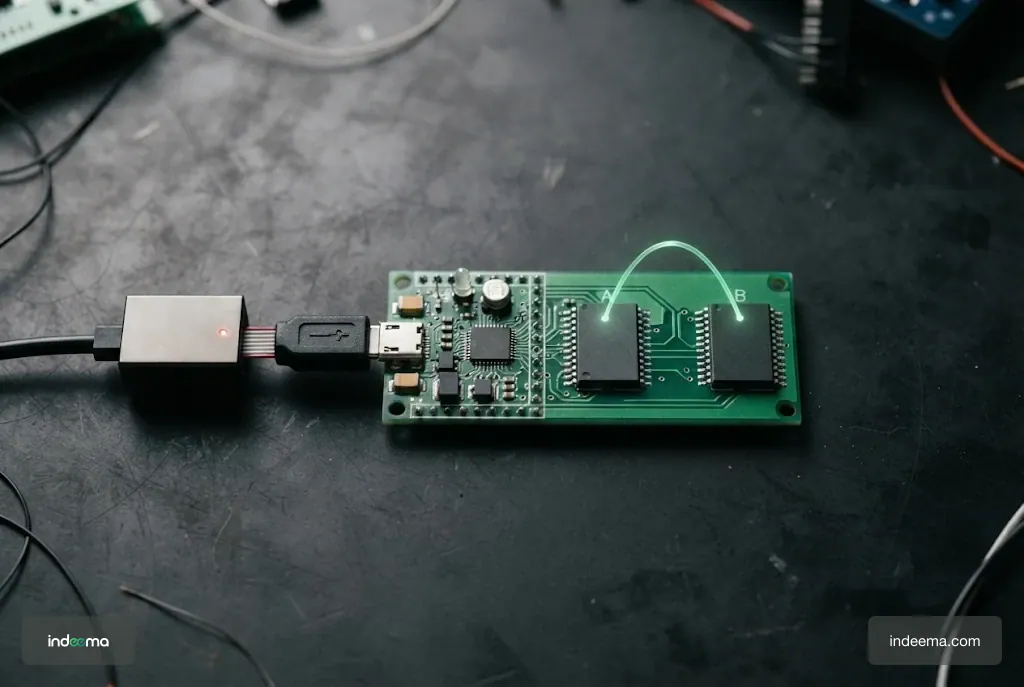
Updates that cannot brick the fleet. Indeema has delivered firmware with MCUboot, custom bootloaders, A/B updates with rollback and secure boot. In one data-link project, the design record specifies a factory slot and two update slots, an image that is verified before the boot choice changes, and automatic rollback to the previous firmware if the new one fails its self-test or power is lost during its first boot. That design has a price in flash. With a 1.5 MB image, two OTA slots need 3 MB and a factory slot raises application space to 4.5 MB, which exceeds a 4 MB flash part. So decide the update architecture before you choose the memory part.
Knowing what is inside. An SBOM generated by the build for every release, not written by hand once, lets a team answer the first question after any disclosure: which devices carry this component.
Our embedded firmware team builds these parts as one design: bootloader, update client, signing and the build pipeline that produces the SBOM.
Where to start this quarter
- List every product with digital elements you sell or will sell in the EU, and check whether any falls under Annex III or IV
- Name the reporting owner and publish a vulnerability contact and disclosure policy before reporting applies
- Generate an SBOM from the build for each current firmware release
- Check that every product in development has secure boot, per-device credentials and a rollback-safe update path
- Decide and document the support period for each product, and plan how long you can build and sign fixes for it
- Split security fixes from feature releases in the release process
- Start the technical documentation and risk assessment now, while the design can still change
You don't need to wait for harmonised standards for any of this. The Regulation already says what the product and the process must do.
If a hardware freeze is coming up, now is the cheapest moment to check the design. Our firmware engineers can go through boot, identity, the update path and SBOM generation with your team, and tell you what the current hardware can support and what needs a board revision.
Engineering trade-offs
Retrofit security into products already in design
- You gain
- Keeps the current hardware and schedule.
- You pay
- Flash, secure storage or a secure boot ROM may be missing, which limits what firmware can fix.
- Choose it when
- The hardware already has enough memory for A/B slots and supports verified boot.
Revise the hardware for the next product generation
- You gain
- Room for A/B updates, a secure element and locked debug from the start.
- You pay
- A board revision and the time it takes.
- Choose it when
- The product will still be sold when the main obligations apply and the current design cannot update safely.
Self-assess against harmonised standards
- You gain
- No third-party procedure for default and many class I products.
- You pay
- Depends on standards being published and applied in full.
- Choose it when
- The product is in the default category, or class I with standards fully applied.
Common mistakes
Treating the CRA as a documentation task
The paperwork is ready, but the device cannot receive a signed security update.
Instead: Start with boot, identity and the update path, then document what the device does.
Planning for the main obligations only
The team has no process when reporting starts for products already on the market.
Instead: Set up the disclosure contact, monitoring and on-call reporting first.
Writing the SBOM once by hand
It is out of date after the next release and useless when a disclosure arrives.
Instead: Generate it in the build for every firmware release and keep it with the release.
Questions engineers ask
What is the Cyber Resilience Act?
The Cyber Resilience Act is an EU regulation that sets cybersecurity requirements for hardware and software products with digital elements. Products must meet them before they are sold in the EU and show it with the CE marking.
When does the Cyber Resilience Act apply?
It entered into force in December 2024. Reporting of actively exploited vulnerabilities and severe incidents applies from September 2026, and the main obligations apply from December 2027.
Does the CRA apply to IoT devices?
Yes. Any connected hardware or software sold in the EU is a product with digital elements, unless a sector rule such as the medical device or vehicle regulations covers it. Some IoT products, such as smart locks, security cameras and routers, are important products with stricter assessment.
Does the CRA require an SBOM?
Yes. Manufacturers must document the components in their products, including a software bill of materials in a commonly used, machine-readable format that covers at least the top-level dependencies.
How long must manufacturers provide security updates?
For the support period, which must be at least five years unless the product is expected to be used for less time. Security updates must stay available for at least ten years after release or for the rest of the support period, whichever is longer.
Was this useful?
Where this shows up in our work
ExpertiseEmbedded and firmware engineeringNeed secure boot, a rollback-safe update path and an SBOM in the build before the CRA deadlines?Apply this to your product
Talk through your device architecture
Sources
- European Commission: Cyber Resilience Act accessed 9 November 2026
- Regulation (EU) 2024/2847 (Cyber Resilience Act), Official Journal of the EU accessed 9 November 2026