


Manufacturing / AI machinery condition monitoring
Vibration diagnostic unit with AI fault classification for rotating machineryHardware, embedded, AI and monitoring software engineering
Turning machine vibration into condition-monitoring views
Rotating mechanisms such as motors, gears and bearings generate vibration signals that maintenance teams need to interpret. iReDS brings sensing, signal processing, AI diagnostics and diagnostic views together in a product for machinery condition monitoring, so a team can learn not only that a machine vibrates abnormally but which part is failing and how.
The product needed to collect vibration data from rotating equipment, recognise the type of fault developing in bearings and other rotating components, and present condition information in a form maintenance teams could inspect and act on.
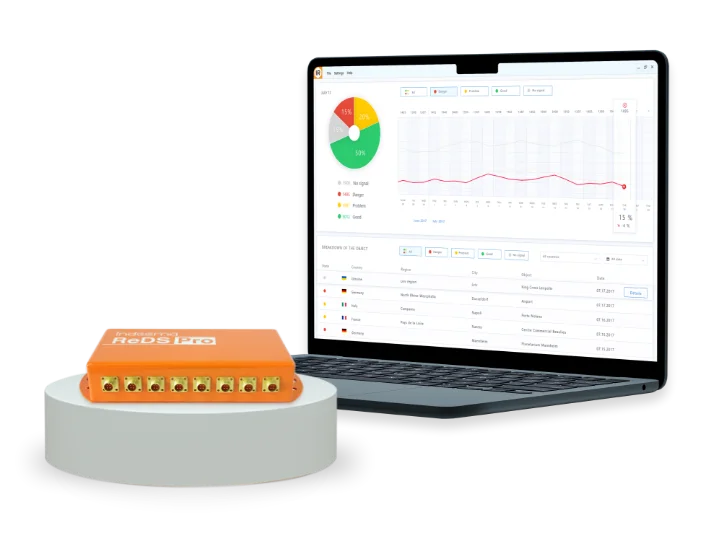
- Product
- Vibration diagnostic unit with AI fault classification for rotating machinery
- Buyer
- Industrial product teams building condition-monitoring systems
- Engagement
- Hardware, embedded, AI and monitoring software engineering
- Indeema scope
- Sensor and device integration, Embedded acquisition and processing, AI fault diagnostics, Monitoring software
The product need
What had to become possible
The product needed to collect vibration data from rotating equipment, recognise the type of fault developing in bearings and other rotating components, and present condition information in a form maintenance teams could inspect and act on.
Ownership, made clear
Where the work started and what Indeema owned
Starting system
Product starting point
The work began with a monitoring requirement for rotating mechanisms and a review of available condition-monitoring approaches.
Measurement requirements
The team defined operating conditions, critical components, expected vibration frequencies, sensor sensitivity and signal requirements.
Indeema owned
Sensor and device integration
Integrate multichannel accelerometers, controller resources, circuit boards and enclosure components into the diagnostic unit.
Embedded acquisition and processing
Read sensor channels and implement calibration and self-diagnostic routines for the measurement path.
AI fault diagnostics
Develop the AI analysis that classifies processed vibration signals by fault type for bearings and other rotating mechanisms.
Monitoring software
Build the user-facing dashboard and supporting software for vibration views, diagnosed fault types, summaries, alerts and reporting.
Worked with
Accelerometers
Capture three-axis vibration measurements from the monitored mechanisms.
Processing and display
Present processed readings through the product interface with local or cloud processing options.
AI diagnostics
Processed vibration features feed the fault-classification model, and its result is shown with the readings.
Product constraints
What made the engineering difficult
- 01
Match the sensor to the machine
The accelerometer frequency range, sensitivity and sampling characteristics had to fit the expected vibration behavior of the monitored equipment.
- 02
Acquire useful signals across channels
The embedded device needed to read multichannel sensor data and support calibration and self-diagnostic routines.
- 03
Tell faults apart
Different defects in bearings and rotating parts leave different signatures in the vibration signal, and the AI had to separate them from normal operation and from each other.
- 04
Make measurements useful to people
The interface had to present vibration readings and diagnostic context without making users interpret raw signals alone.
Engineering judgement
Decisions that shaped the product
Specify measurement conditions first
Sensor and controller requirements were framed around the target frequency range, sensitivity, operating conditions and signal path.
Keep signal processing explicit
Embedded acquisition and Fourier-based signal processing prepare clean, comparable inputs, so the AI works on well-defined features rather than raw noise.
Classify the fault, not just the anomaly
The AI names the type of fault, so an alert tells the maintenance team what to inspect.
Support local or cloud processing
iReDS offers local and cloud-based processing as deployment options rather than requiring one processing location.
Product system
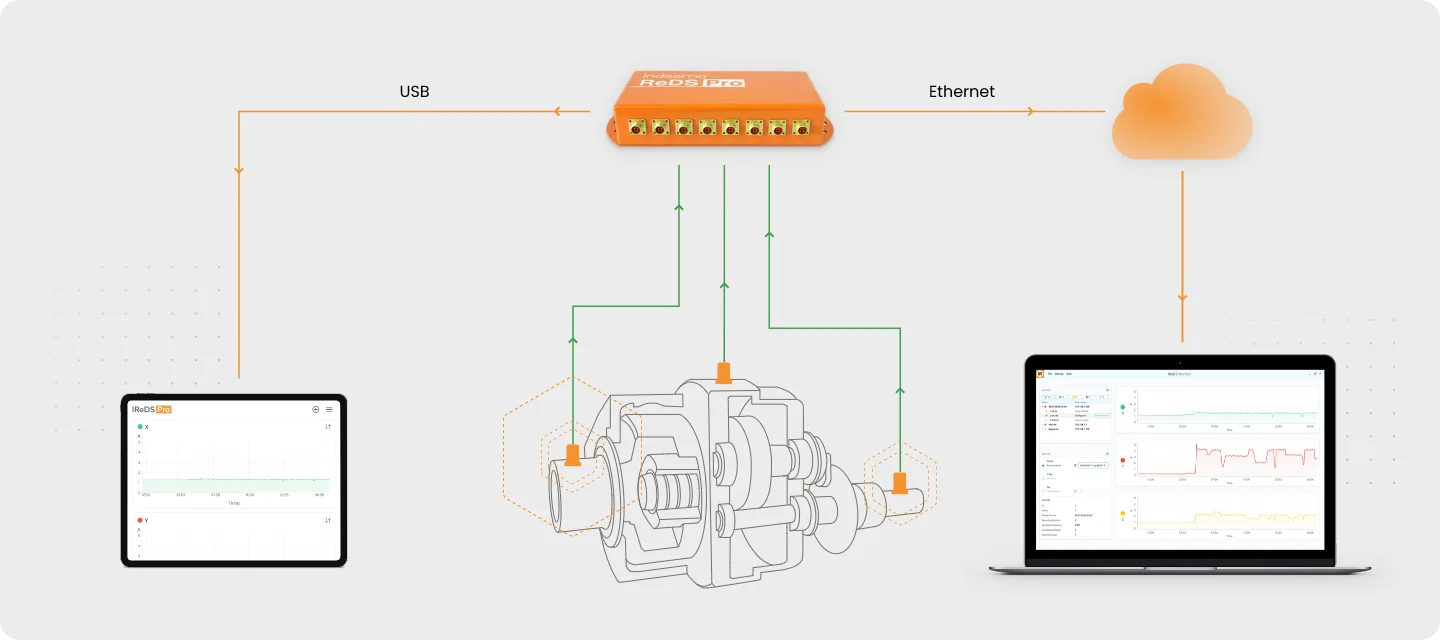
How the product moves from signal to user
- 01
Accelerometers
Measure vibration on rotating equipment.
- 02
iReDS unit
Acquire sensor channels and run calibration and self-diagnostics.
- 03
Signal processing
Prepare measurements for product views and reports.
- 04
AI diagnostics
Classify the vibration signature by fault type for bearings and other rotating parts.
- 05
Monitoring interface
Present vibration readings, diagnosed fault types, summaries and alerts to users.
Delivered product capability
What the product can do
- 01
Vibration acquisition
Collect three-axis vibration data from rotating machinery through the diagnostic unit.
- 02
Signal processing
Filter and organize measurements for condition-monitoring workflows.
- 03
AI fault classification
Identify the type of fault in bearings and other rotating mechanisms from their vibration signals.
- 04
Dashboard and reports
Show vibration readings, diagnosed fault types, summaries and alerts in a user-facing interface.
- 05
Configurable views
Adjust sensor sensitivity, processing parameters and reporting format for product requirements.
Product change
What changed for the product team
The product moved from a monitoring requirement to a defined hardware-and-software system: accelerometer inputs, an acquisition and processing unit, AI analysis that identifies the type of fault in bearings and other rotating parts, and interfaces for reviewing vibration and diagnostic information.
For a team building an equipment-monitoring product, the case shows how sensor selection, embedded acquisition, signal processing, AI diagnostics and the user interface can be engineered as one product scope.
- AI analysis of vibration signals identifies the type of fault in bearings and other rotating mechanisms.
- Fewer unplanned downtimes from key-element failures
- Up to 75 % In operation · Reported for monitored equipment in operation; an upper bound, not a typical result
Product evidence
A closer look at the product
Technology, in context
C++ · Qt · Digital signal processing · Fourier transform · ADXL345 accelerometer · ATmega328P controller · Machine learning (fault classification)
A comparable product problem?
iReDS vibration monitoring
Bring the product context, the system that already exists and the engineering decision you need to make.