


Insights / Product Discovery / Engineering management
Outsourcing vs Outstaffing: What Is the Difference and Which to Choose
How outsourcing and outstaffing differ in who manages the work and owns the result, and how to choose the model that fits your team and product.

The short answer
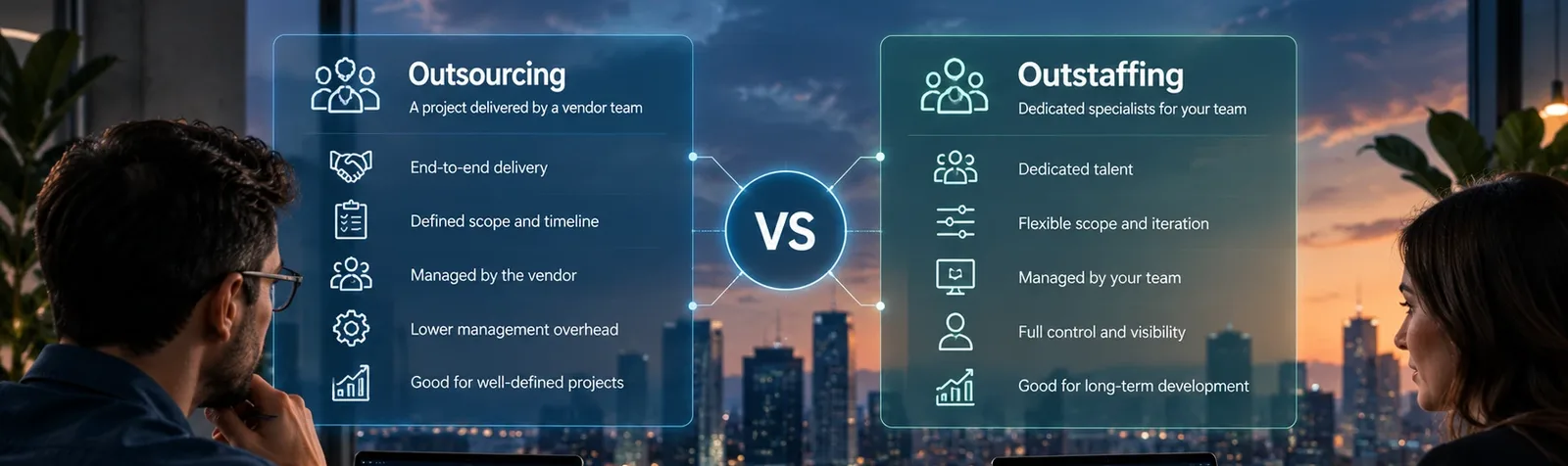
Outsourcing means an external company takes responsibility for delivering a defined project or function: it manages the people, the process and the quality of the result. Outstaffing means external engineers join your team and work under your management, while the vendor handles their employment. The real difference is who is accountable for delivery. Choose outsourcing when you lack the skills or the capacity to manage the work; choose outstaffing when you already run a working development process and need more people or a specific skill inside it.

Two models for using external engineers
Few companies can build every product capability in-house. When a project needs skills or capacity the internal team does not have, there are three broad options: hire, outsource the work, or outstaff people into the existing team. Outsourcing and outstaffing both use external engineers, so the terms are often confused. They differ in who directs the work and who answers for the outcome.
- IT outsourcing
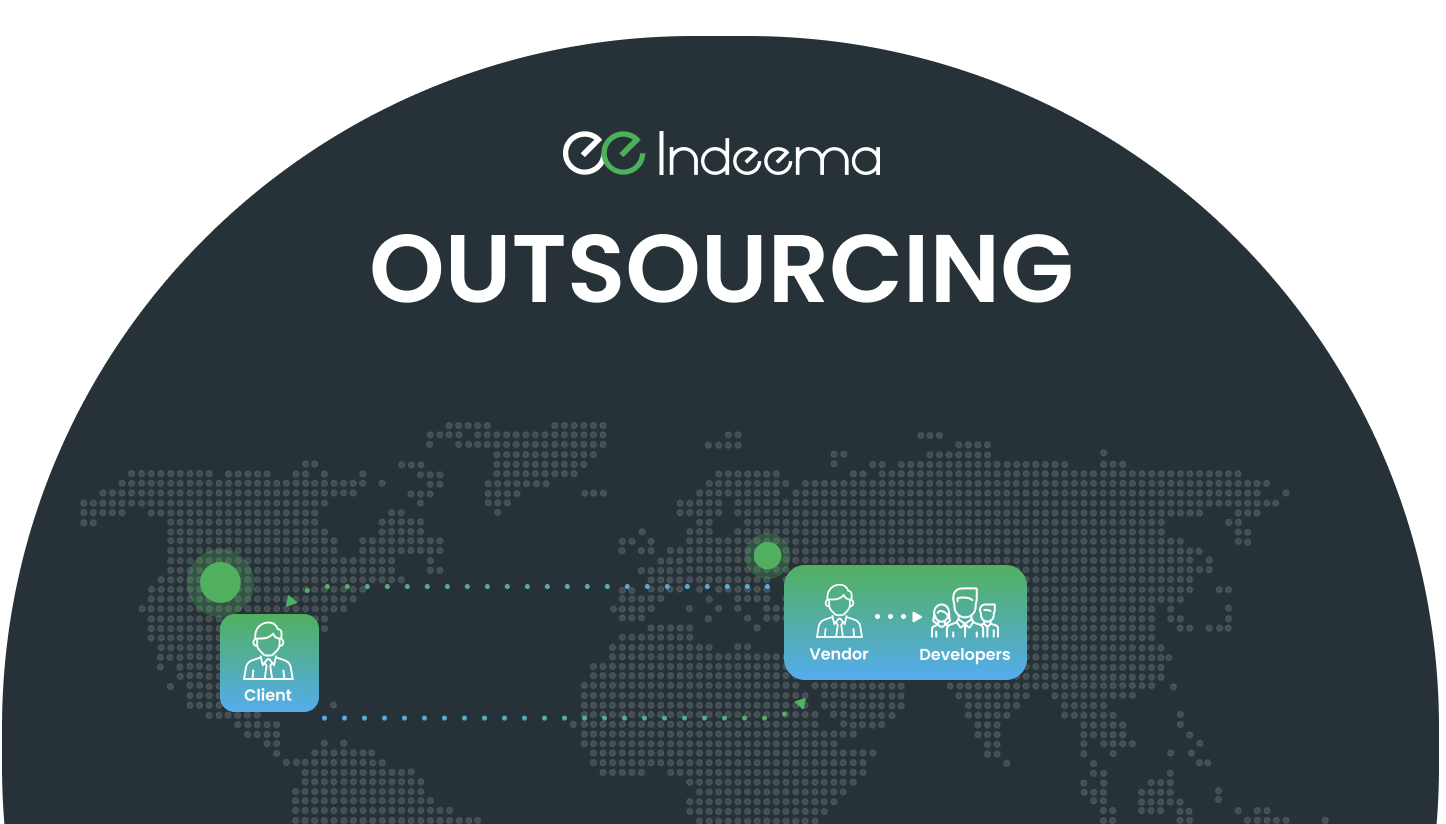
- An outside company performs IT work, such as software development, maintenance or support, that would otherwise be done by internal staff. The vendor manages its team and is responsible for delivering the agreed result.
- Outstaffing
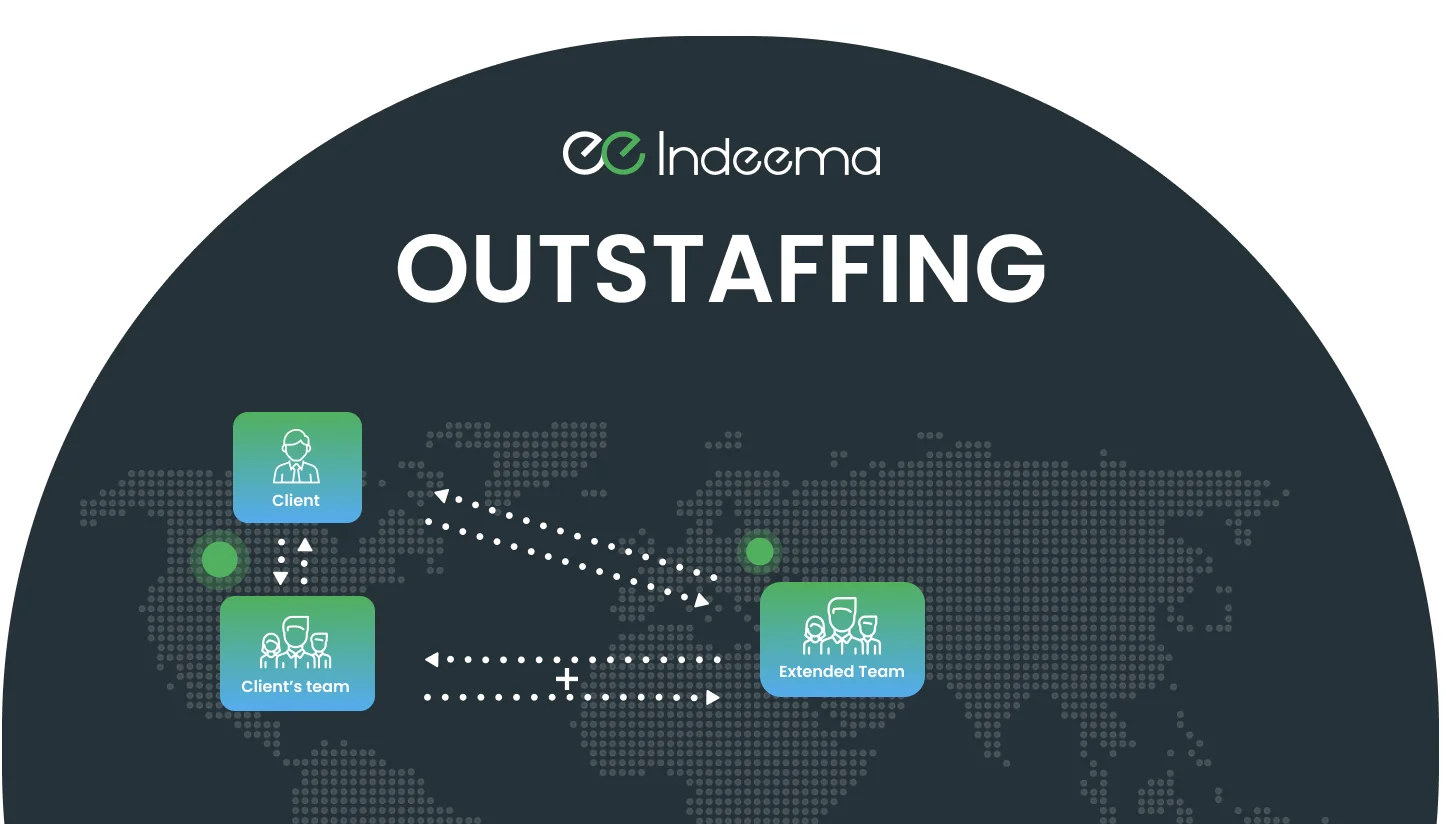
- External specialists work as part of the client's own team, under the client's management and processes. The vendor recruits and employs them and handles HR, equipment and workplace; the client directs the work.
Outsourcing: the vendor owns delivery
Outsourcing suits a company that has a clear goal but does not want to build or run the team that delivers it. You agree the scope, and the vendor coordinates its developers, testers and project management, and oversees communication, deliverables, quality control and schedules.
- Access to skills you don't have. A vendor that already works in a domain, such as connected devices, brings that experience instead of your team learning it on the project.
- Less management load. Day-to-day coordination and quality control sit with the vendor.
- Faster start. An existing team avoids the time it takes to recruit and onboard.
- Less visibility and control. You see results and reports rather than every decision, which suits some companies and frustrates others.
- A higher rate. You pay for the management and coordination as well as the engineering time.
Outsourcing fits best when the work is well outside your team's core skills. A mobile team asked to deliver a connected device would need months to learn embedded and cloud work; handing that scope to a team that already does it is usually faster and less risky.
Outstaffing: you own delivery, the vendor owns employment
Outstaffing extends an existing team. The external engineers follow your process, report to your managers and share your objectives. The vendor sources the people and takes care of contracts, payroll, equipment and workplace, so you don't carry those employment obligations.
- Full control. You set priorities, manage the work and own quality control.
- Dedicated people. You choose the specialists and keep them on your project, which builds product knowledge over time.
- Flexible capacity. You can add or change specialists as the work changes, without hiring for every role.
- Delivery risk stays with you. If the internal process or management is weak, extra people will not fix it.
- Fit is your job too. The vendor checks skills, but you still need to vet each person for your environment and way of working.
Outstaffing works well when you already have an established development process, often agile, and need more capacity or a specific skill to meet a deadline or start a new stream of work.
Outsourcing vs outstaffing side by side
| Question | Outsourcing | Outstaffing |
|---|---|---|
| Who manages the engineers day to day | The vendor | You |
| Who is accountable for delivery and quality | The vendor, against the agreed scope | You; the vendor answers for the people it provides |
| What you need in-house | A product owner who can set goals and accept results | A working development process and technical management |
| Visibility into the work | Reports, demos and milestones | Full, as part of your team |
| What the rate covers | Engineering plus management and coordination | Engineering time plus employment and workplace |
| Best for | Skills outside your core team, or work you don't want to manage | Adding capacity or a skill to a team that already delivers |
The risks to manage in either model
The model sets who is accountable, but the same three risks appear in both, and they decide whether the arrangement works.
- Communication. Time zones, language and the lack of face-to-face contact cause misunderstandings. Agree overlap hours, meeting routines and how decisions are written down. A nearshore partner can reduce the time-zone gap.
- Security. Handing over systems and code means trusting someone else's practices. Check access control, backups, recovery and how the partner handles your data before work starts.
- Cost transparency. Requirements change. Ask how the partner prices changes in scope or team size, and compare on the cost of the whole result, not the hourly rate alone.
How to choose between outsourcing and outstaffing
A simple rule: if you can manage the work and only lack people, outstaff. If you lack the skills or the capacity to manage the work, outsource it to a team that already does it.
Ask each option the same questions
- Do we already run a development process that new people can join?
- Is the work inside our team's core skills, or a new domain such as embedded or cloud?
- Who sets priorities and resolves disagreements?
- Who reviews quality before release?
- Who supports the product after launch?
- How is knowledge transferred to our team, and what happens if a key person leaves?
- Has the partner done comparable work, and will previous clients talk to us?
- How are changes in scope or team size priced?
Price matters, but deciding on rate alone is a common mistake: a lower rate does not show the cost of managing or correcting the work. Treat the choice as a long-term working relationship and pick a partner that understands your product and your industry.
Questions engineers ask
What does outstaffing mean?
Outstaffing means hiring external specialists who work as part of your own team, under your management, while a vendor employs them and handles HR, payroll, equipment and workplace. You direct the work and own the result.
Was this useful?
Where this shows up in our work
ExpertiseProduct Discovery & Technical Strategy (IoT Consulting)Before choosing a delivery model, it helps to know which skills the product needs and who should own each part. That scoping is the product discovery work we do at the start of connected-product projects.Apply this to your product