
Introduction: Our Insights
If you only read the headlines coming out of Las Vegas this week, you probably think CES 2026 was about transparent TVs, flying taxis, and robot dogs doing backflips.
That’s the show the public sees. But for those of us on the floor—engineers, CTOs, and product builders—the real story was much quieter. And much more important.
We spent four days talking to hundreds of innovators, from French fashion-tech startups to Korean micro-electronics giants. We were looking for the pattern beneath the noise. And we found it.
The most underrated aspect of the tech world today isn’t "AI" or "Speed." It is Seamlessness.
Technology is no longer a shiny box you carry; it's a part of your life. It is becoming a seamless layer woven into our clothes, our bodies, and our industrial infrastructure. Here are the 5 trends within our scope that we believe will drive the next year of engineering and our technical perspective on them.
1. Wearables "Grow Up": Seamless Health
The Shift: For a decade, wearables were clunky accessories that counted steps. In 2026, they are becoming invisible medical guardians. We saw a massive pivot toward specialized, medical-grade devices that you wear and forget.
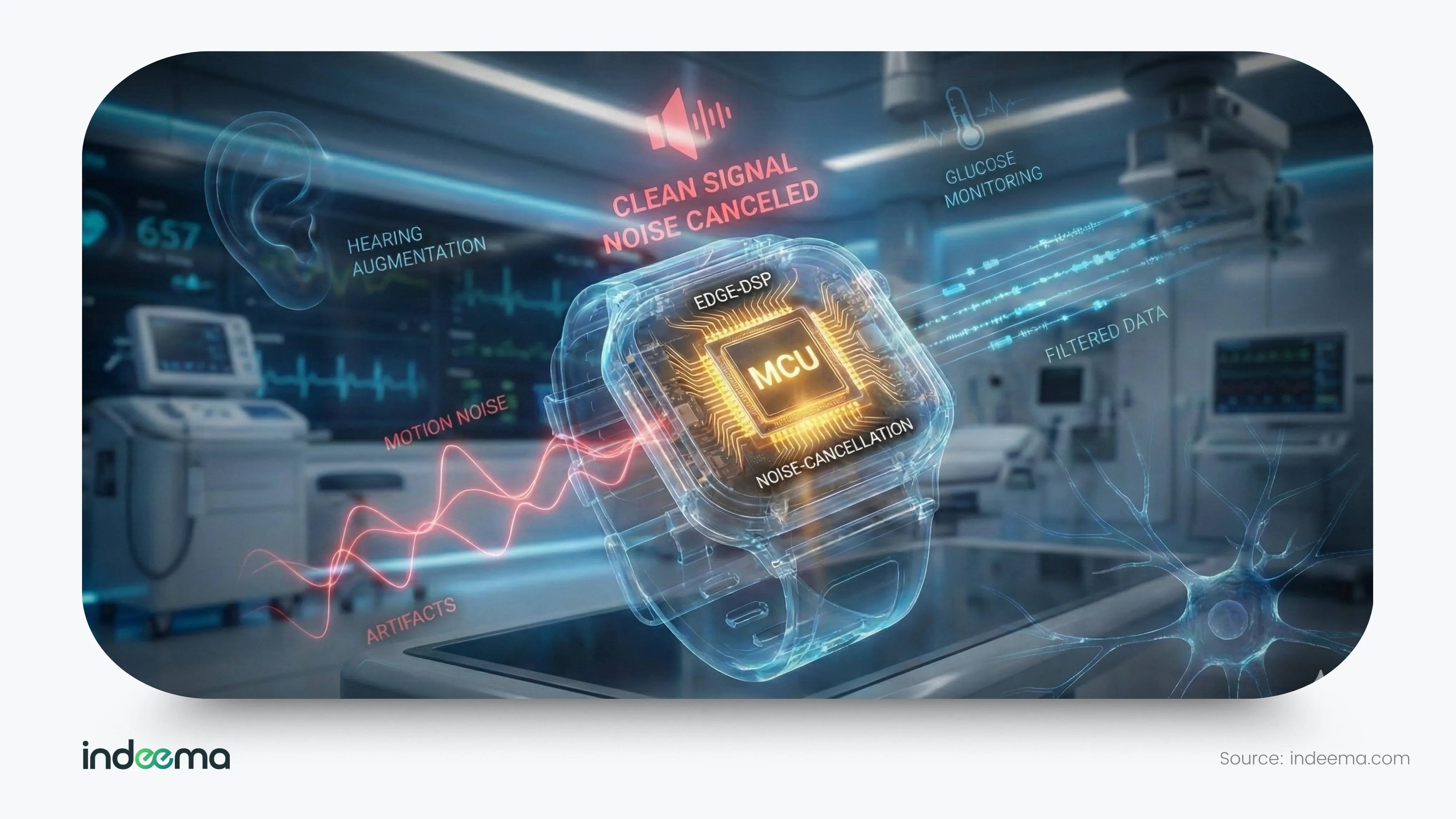
The Engineering Reality: To make health monitoring seamless, you have to solve the Signal-to-Noise Ratio (SNR).
The "Noise" Problem: A sensor on a moving wrist or inside an ear canal generates noisy data. If the device constantly pings you with false alarms, the seamless experience breaks.
Technical Take: We see too many startups trying to solve this with better hardware. In our experience, that’s a losing battle.
Our opinion: The seamlessness comes from Edge-DSP (Digital Signal Processing). You cannot rely on sending raw data to the cloud for cleaning—the latency breaks the "real-time" promise. We believe the architecture must shift to running lightweight noise-cancellation models directly on the MCU. If your device isn't filtering motion artifacts before the data hits the Bluetooth stack, you aren't building a seamless medical device; you're building a noisy gadget.
Turning a consumer wearable into a medical-grade diagnostic tool requires more than just a sensor. It requires clinical-grade data accuracy and extreme power efficiency. We bridge the gap between wellness gadgets and regulated medical technology to create devices that patients actually want to wear.
Engineer Your Healthcare Solution
2. Drones & UAVs: Seamless Autonomy
The Shift: In previous years, a drone needed a pilot staring at a screen. This year, the focus was on autonomy in hazardous environments. We saw drones inspecting pipelines and navigating complex industrial sites without a human in the loop.
The Engineering Reality: The constraint here isn't aerodynamics; it's Edge Computing.
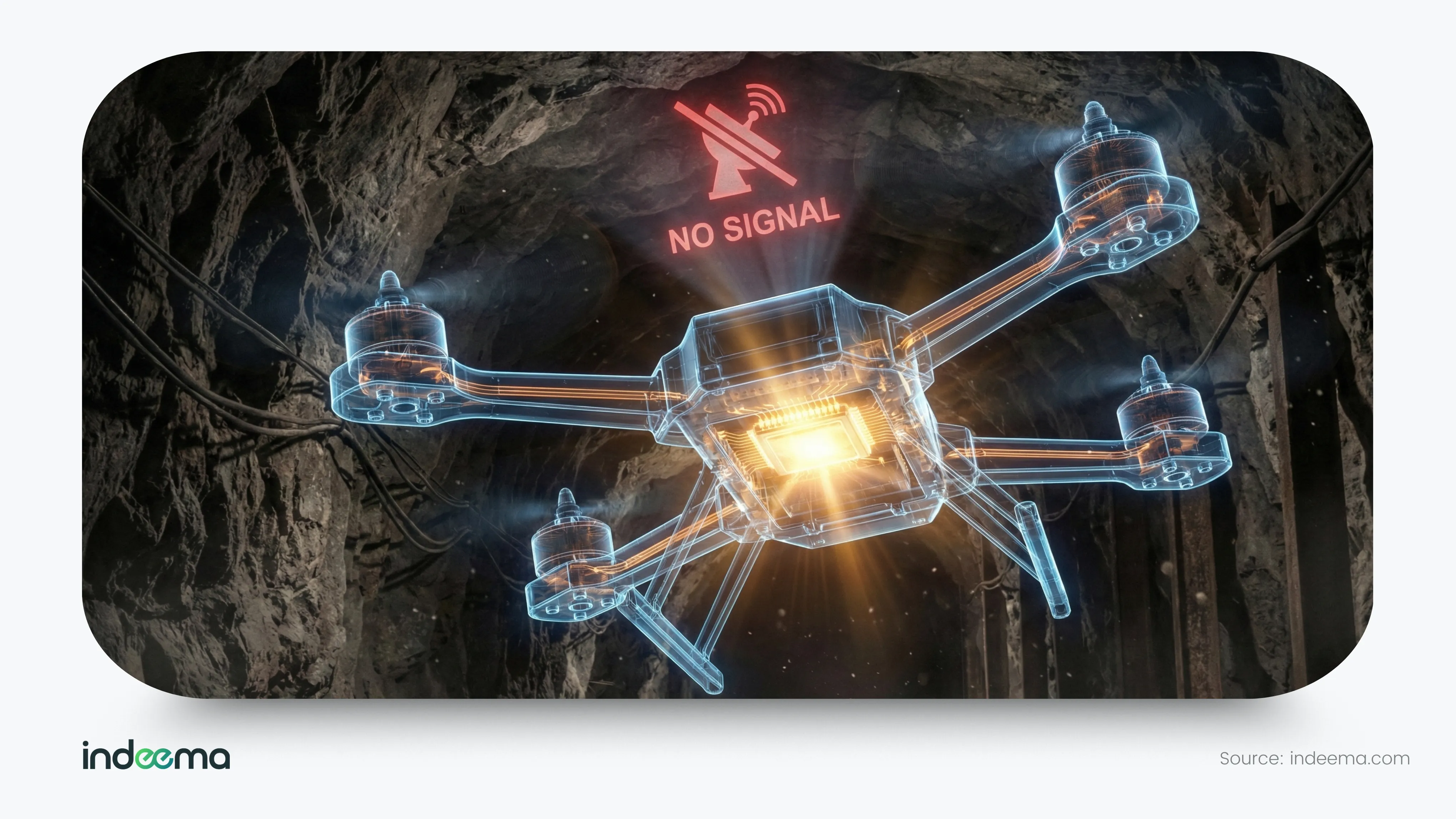
The "Lag" Problem: You can't rely on the cloud to make flight decisions. A drone that pauses to "think" (buffer) isn't seamless; it's a safety hazard.
Technical Take: There is a dangerous misconception that 5G makes remote control seamless. We disagree. In industrial environments (mines, offshore rigs), connectivity is never guaranteed.
Solving the autonomy puzzle in industrial drones requires more than just connectivity. It requires onboard intelligence that works without the cloud. Let’s build your next-gen navigation stack.
Build Autonomous UAV Solutions
Our opinion: True seamlessness requires a "Disconnect-First" architecture. The navigation stack—SLAM and obstacle avoidance—must run entirely on the edge device. We are advising clients to over-invest in onboard compute (NPUs) because a drone that can't think for itself will never be truly seamless to operate. As we often say, if a drone needs the cloud to 'think' in a jammed environment, it becomes a flying brick.
3. "Tech-Couture": Seamless Esthetics
The Shift: Fashion-tech has finally moved past the "gimmick" phase. We saw flexible displays and smart textiles that actually look like luxury goods, not science projects.
The Engineering Reality: Integrating tech into a handbag or a pair of glasses presents a brutal conflict: Functionality vs. Elegance.
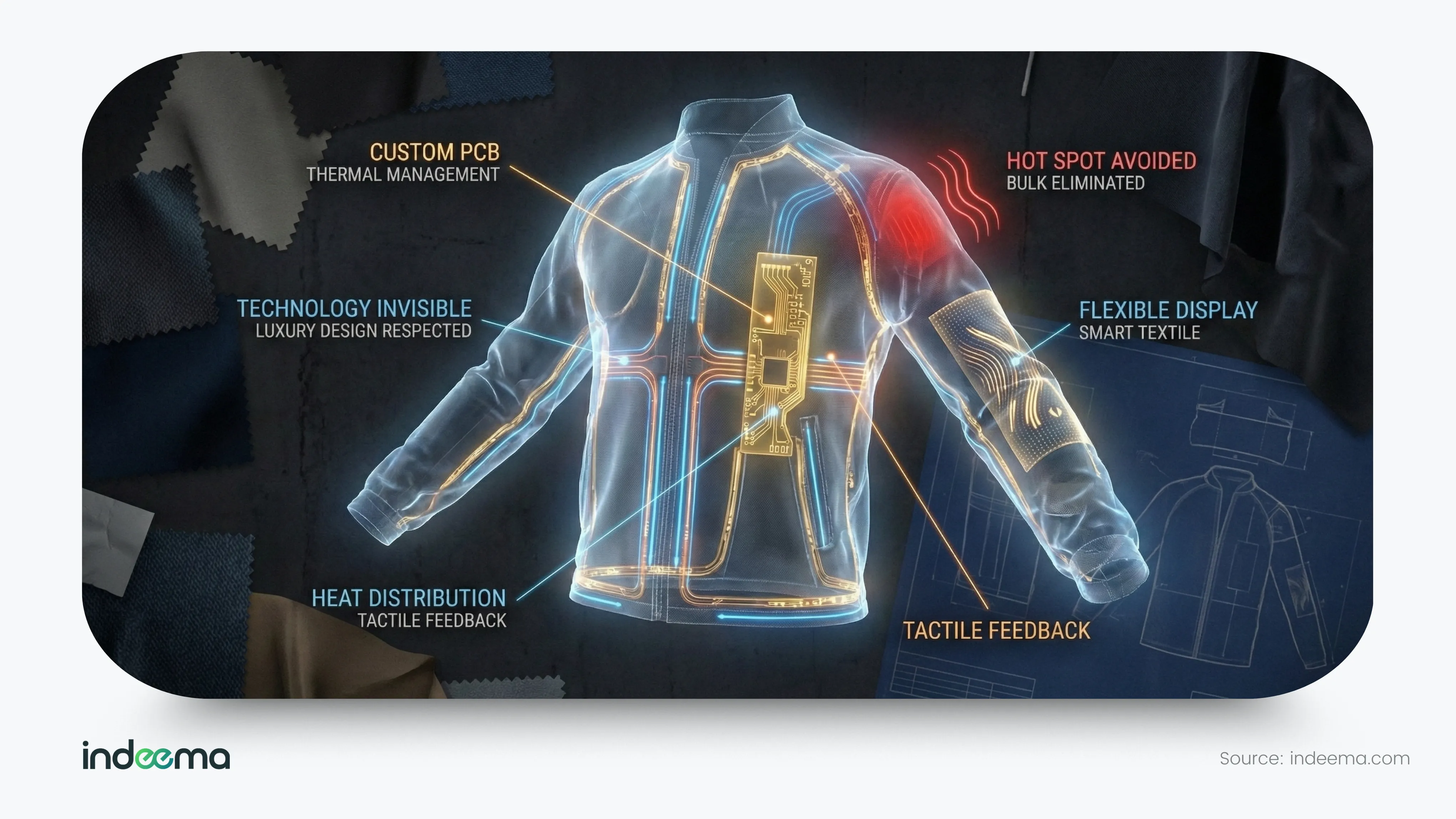
The "Space" Problem: You can't just shove a battery into a designer bag. If the user feels the bulk or sees a cheap plastic button, the "luxury" illusion is broken.
Technical Take: Many fashion brands treat electronics as an "accessory" to be added later. This fails because it disrupts the seamless luxury experience.
Our opinion: Engineering IS the UX. It’s not enough to make the circuit work; you have to make it disappear. We believe the solution is a custom PCB design that acts as a structural element, distributing heat and bulk so the user never feels it. The interface must not spoil the luxury look. If the technical implementation is flawless but the interaction feels "techy" rather than "luxury," the product has failed. That’s why the entire team must collaborate closely on the product, ensuring electronics and esthetics blend into a seamless experience.
4. Smart Home: Seamless Automation
The Shift: At CES 2026, Matter and local AI finally took center stage. The focus shifted from "remote control" (taking out your phone to turn on a light) to true automation (the house knowing what to do without you asking).
The Engineering Reality: The barrier to seamlessness is Latency & Privacy.
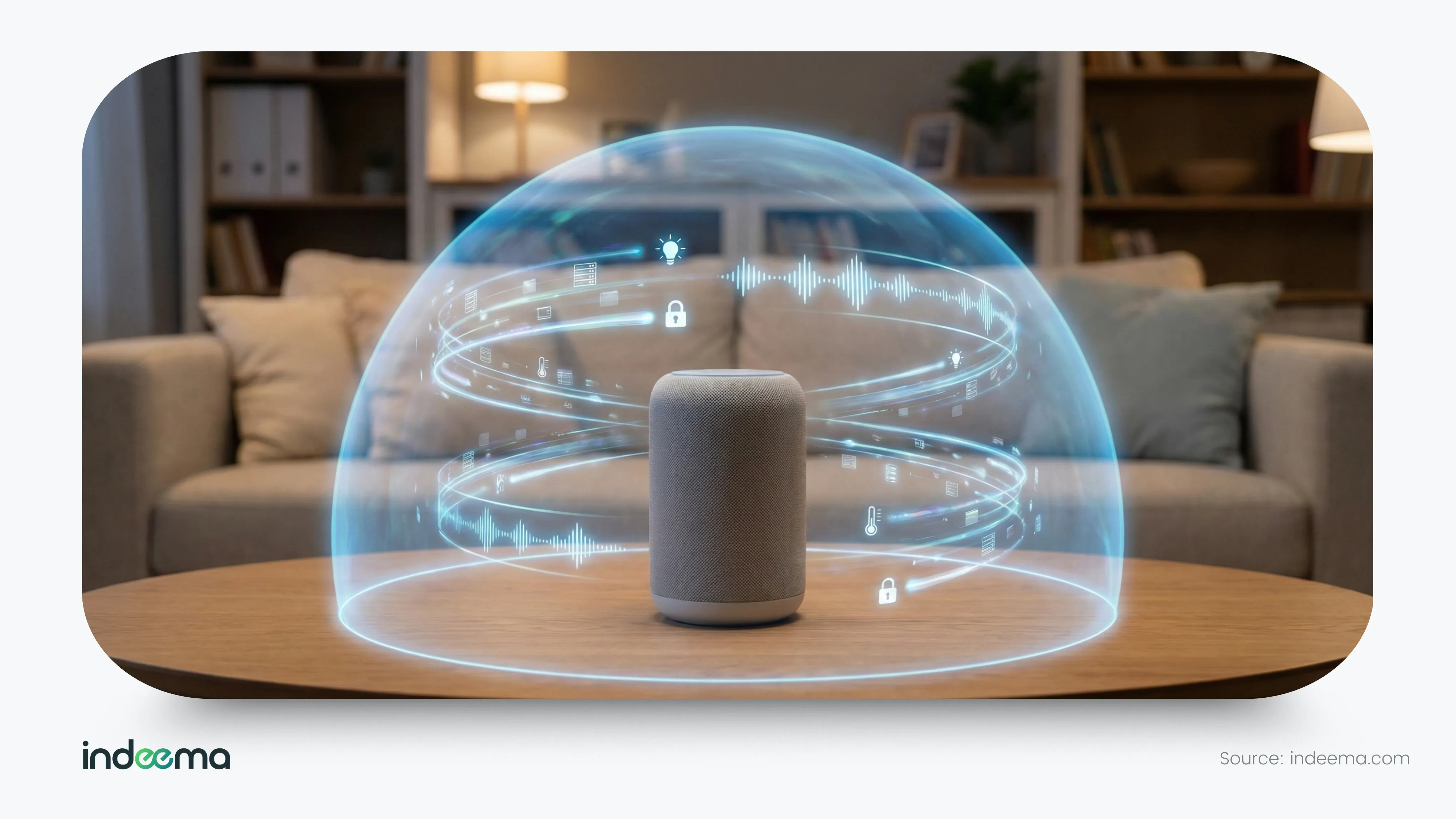
The "Trust" Problem: Users want smart homes, but they don't want their voice recordings sent to a cloud server.
Technical Take: The era of "Cloud-Based Intelligence" for the home is ending. Users are noticing the 500ms lag when a command goes to the cloud and back. That lag breaks the feeling of seamlessness.
Our opinion: We are pushing for Local LLMs running on home hubs. The hardware is finally powerful enough. If you are building a smart home product in 2026 that requires an internet connection to turn on a light, you have failed the seamlessness test. Local execution is the only way to guarantee the speed and privacy users now demand. This is not just a trend, but a necessity due to "Privacy by Design"—a standard now demanded by regulators and major investors.
A truly seamless smart home doesn't just connect; it thinks. We help you move beyond "remote control" gadgets to architect edge-first systems that prioritize privacy and speed.
Explore Smart Home Engineering
5. Energy Tech: Seamless Integration
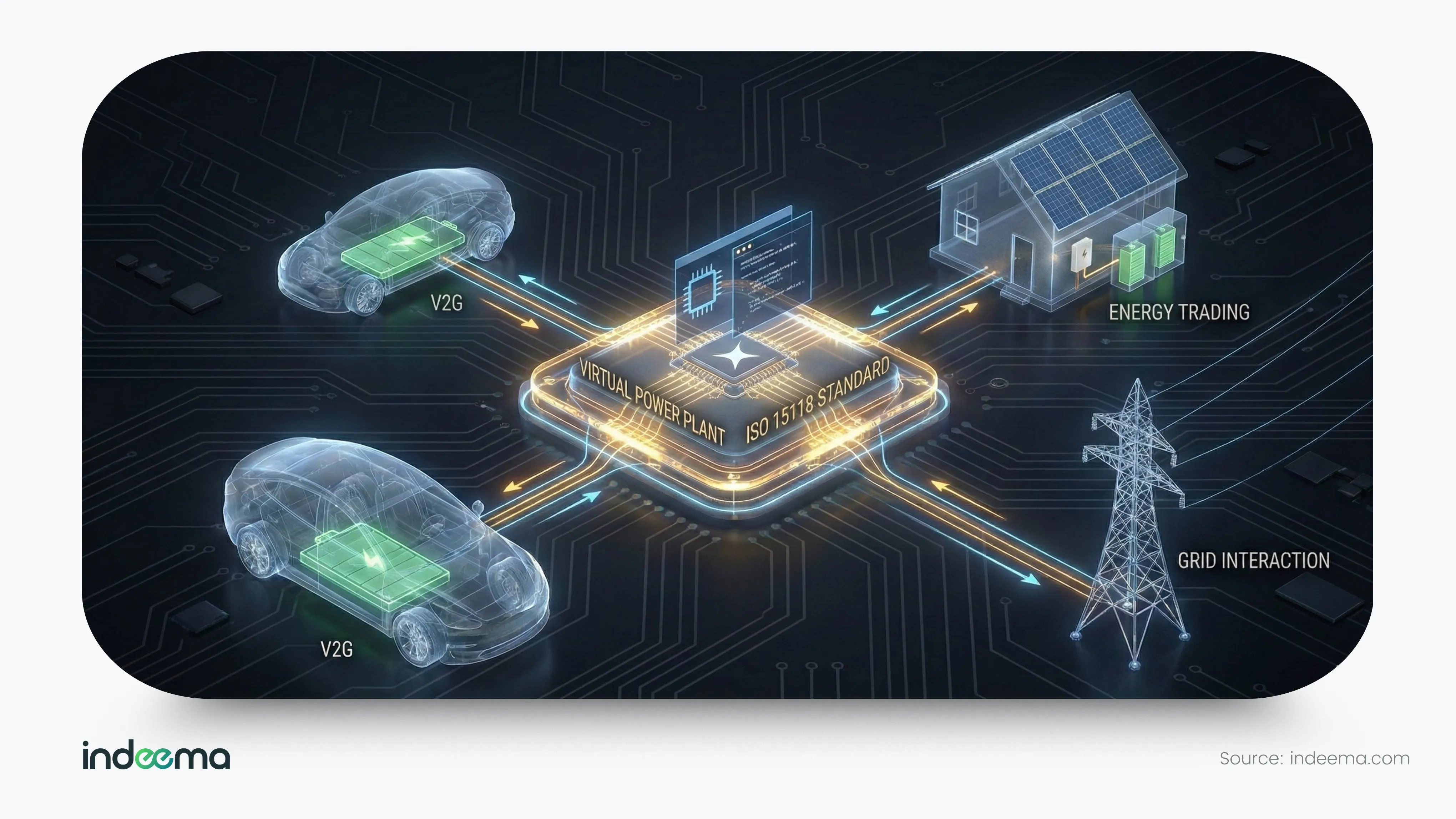
The Shift: Energy management used to be a manual utility problem. Now, it's a seamless software ecosystem. We saw a surge in V2G (Vehicle-to-Grid) technology where cars automatically store and sell power back to the grid.
The Engineering Reality: The grid is becoming bidirectional.
The "Orchestration" Problem: Managing the flow of energy between a solar panel, a home battery, an EV, and the public grid requires complex logic. If the user has to manually configure this, it won't work.
Technical Take: The hardware for V2G is ready. The failure point is the Interoperability Logic.
Orchestrating a bidirectional grid is an invisible engineering challenge. We specialize in the complex interoperability logic needed to turn fragmented hardware into a unified energy ecosystem.
Our opinion: Creating a "Virtual Power Plant" is easy on paper but a nightmare in practice due to protocol fragmentation. The challenge is writing software that can predict load spikes and "smooth" the curve automatically, without crashing the local microgrid. This software layer is what turns a collection of batteries into a seamless energy ecosystem.
Conclusion: We Love the "Hard" Stuff
We left Las Vegas not excited about the toys, but excited about the puzzles.
Integrating medical-grade AI into a ring? Designing a luxury interface that hides the hardware? Orchestrating a decentralized energy grid?
These are the engineering challenges we live for. The "shiny" tech makes the headlines, but the invisible engineering is what makes the future seamless.
Bridge your code and circuit.